
Below is a complete blog article based on the “Hand Tools List” content brief for National Tool Warehouse.
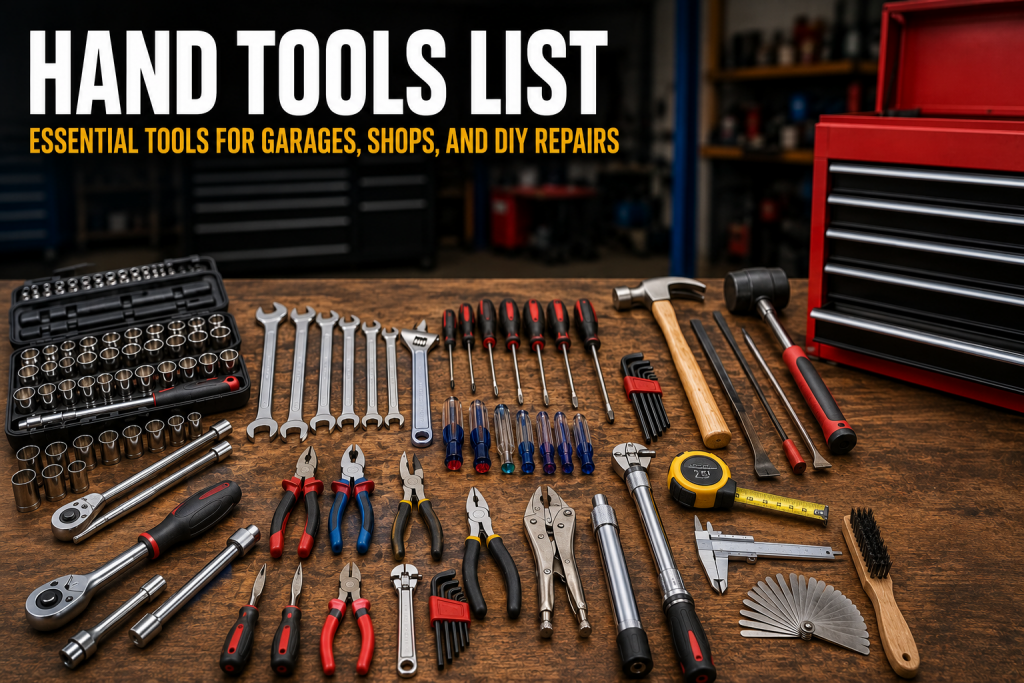
A good hand tools list should include the tools needed for fastening, loosening, gripping, cutting, measuring, prying, striking, and general repair work. For automotive users, a well-built hand tool kit usually starts with sockets, ratchets, wrenches, screwdrivers, pliers, hammers, pry bars, measuring tools, and reliable tool storage.
The right hand tools depend on the type of work you plan to do. A homeowner handling basic repairs will need a smaller kit than a professional technician working in a service bay every day. DIY automotive maintenance, specialty vehicle repairs, shop work, and professional mechanic jobs all require different tool combinations.
This guide breaks down the most useful hand tools by category so you can build a practical tool kit for your garage, shop, or service environment.
Hand Tools List: The Essentials
Before getting into each tool category, here is a quick essential hand tools list for most garages and repair shops:
| Essential Hand Tool | Common Use |
|---|---|
| Socket set | Tightening and loosening nuts and bolts |
| Ratchets | Turning sockets quickly and efficiently |
| Extensions | Reaching recessed or awkward fasteners |
| Combination wrenches | Working on nuts and bolts where sockets may not fit |
| Adjustable wrench | General-purpose fastening when size varies |
| Screwdrivers | Driving and removing screws |
| Pliers | Gripping, bending, pulling, and cutting |
| Locking pliers | Clamping and holding parts in place |
| Hex keys / Allen keys | Working with hex fasteners |
| Torx keys or Torx drivers | Common automotive and equipment fasteners |
| Hammers | Striking, shaping, and controlled force |
| Pry bars | Lifting, separating, and positioning parts |
| Utility knife | Cutting packaging, hose, trim, and materials |
| Pick set | Removing clips, seals, O-rings, and small parts |
| Files | Smoothing, shaping, and cleaning edges |
| Tape measure | Basic measuring and layout |
| Feeler gauges | Measuring small gaps and clearances |
| Torque wrench | Tightening fasteners to specification |
| Breaker bar | Loosening stubborn or high-torque fasteners |
| Clamps | Holding parts together during work |
| Tool box or tool chest | Organizing and protecting tools |
Automotive users may also need specialty tools depending on the job, vehicle type, and repair area.
Sockets, Ratchets, and Drive Tools
Sockets and ratchets are core hand tools for automotive repair. They allow you to remove and install fasteners faster than many standard wrenches, especially when working on engines, suspension parts, wheels, brackets, and general mechanical repairs.
Socket Sets
A socket set is one of the first tools most garage owners and mechanics should buy. Sockets fit over nuts and bolts and are used with ratchets, breaker bars, extensions, and torque wrenches.
Most automotive tool kits should include both metric and SAE sockets. Many modern vehicles use metric fasteners, but SAE sizes are still useful for older vehicles, equipment, trailers, and general shop work.
Common socket types include:
| Socket Type | Best For |
|---|---|
| Shallow sockets | General fasteners with easy access |
| Deep sockets | Longer bolts, studs, and recessed nuts |
| Chrome sockets | Standard hand tool use with ratchets |
| Impact sockets | Use with impact tools and high-force applications |
| Metric sockets | Most modern vehicle fasteners |
| SAE sockets | Older vehicles, equipment, and general use |
Drive size also matters. A 1/4-inch drive is useful for small fasteners and tight spaces, a 3/8-inch drive is a versatile everyday option, and a 1/2-inch drive is better for larger fasteners and higher-torque work.
Ratchets
Ratchets are used with sockets to tighten and loosen fasteners without removing the tool from the fastener after every turn. This makes them faster and more convenient than turning a socket by hand.
Most mechanics use ratchets in multiple drive sizes. A small 1/4-inch ratchet is helpful for dashboards, trim, and small engine components. A 3/8-inch ratchet handles many common automotive jobs. A 1/2-inch ratchet provides more leverage for larger bolts.
Fine-tooth ratchets are especially useful in tight spaces because they require less handle movement to engage the next tooth.
Extensions and Adapters
Extensions help you reach recessed or awkward fasteners that a ratchet alone cannot access. They are useful for engine bays, under-dash work, suspension components, and areas where parts block direct access.
Useful drive accessories include:
| Accessory | Use |
|---|---|
| Extensions | Add reach between the ratchet and socket |
| Universal joints | Help access fasteners at an angle |
| Swivel adapters | Improve access in tight or offset spaces |
| Reducers | Allow smaller sockets to fit larger drive tools |
| Adapters | Connect different drive sizes |
Breaker Bars
A breaker bar is a long, non-ratcheting handle used to loosen stubborn or high-torque fasteners. It gives you more leverage than a standard ratchet and is useful for lug nuts, suspension bolts, axle nuts, and larger mechanical fasteners.
A breaker bar should not replace a torque wrench for tightening. It is primarily used for loosening.
Wrenches
Wrenches are essential for bolts and nuts where sockets may not fit. They are useful in tight spaces, around lines and hoses, and on fasteners where access is limited from above.
Combination Wrenches
Combination wrenches have an open-end side and a box-end side. The open end slides onto fasteners from the side, while the box end wraps around the fastener for a better grip.
A good wrench set should include both metric and SAE sizes. Combination wrenches are useful for general maintenance, automotive repairs, equipment work, and shop tasks.
Adjustable Wrenches
An adjustable wrench is useful when the exact fastener size is unknown or when you need one tool for several sizes. It is a good general-purpose tool for light repairs, household work, and shop use.
However, adjustable wrenches are not always ideal for high-torque fasteners. If the jaws are not adjusted tightly, they can slip and round off the fastener.
Ratcheting Wrenches
Ratcheting wrenches work like standard combination wrenches but include a ratcheting mechanism on the box end. This allows you to turn fasteners faster without lifting and repositioning the wrench each time.
They are especially helpful in tight spaces and for repetitive fastening work.
Specialty Wrenches
Some jobs require specialty wrenches. These are especially common in automotive repair, brake work, fuel systems, hydraulic systems, and precision fastening.
Common specialty wrenches include:
| Specialty Wrench | Common Use |
|---|---|
| Line wrenches | Brake lines, fuel lines, and fittings |
| Flare nut wrenches | Gripping soft fittings with less risk of rounding |
| Torque wrenches | Tightening fasteners to specification |
| Crowfoot wrenches | Accessing fasteners where a socket or wrench will not fit |
Screwdrivers and Drivers
Screwdrivers are basic but essential hand tools for garage, shop, interior, electrical, trim, and general repair work. A quality screwdriver set should include different tip styles, sizes, and shaft lengths.
Flathead and Phillips Screwdrivers
Flathead and Phillips screwdrivers are used for general fastening, electrical covers, interior panels, household tasks, and shop repairs.
Short screwdrivers are useful in tight areas, while longer screwdrivers help reach recessed screws. Magnetic tips can also be useful when working with small fasteners.
Torx Drivers
Torx fasteners are common in automotive applications. They are often found on interior trim, body panels, electronics, brake components, and some engine parts.
A Torx driver set or Torx bit set is a smart addition to an automotive hand tool kit.
Hex Keys / Allen Keys
Hex keys, also called Allen keys, are used for hex fasteners. They are common on accessories, small equipment, bicycles, machinery, and some automotive components.
Both standard L-shaped hex keys and socket-style hex bits can be useful depending on the job.
Nut Drivers and Bit Sets
Nut drivers are useful for smaller fasteners, hose clamps, panels, covers, and electrical work. Driver bit sets add flexibility by giving you multiple bit styles in one compact kit.
A basic driver bit set may include Phillips, flathead, Torx, hex, square, and specialty bits.
Pliers and Gripping Tools
Pliers help grip, bend, pull, cut, twist, and hold parts. They are used across almost every type of garage and shop repair.
Slip-Joint Pliers
Slip-joint pliers are general-purpose gripping tools. They can adjust to different widths and are useful for holding, turning, and bending small parts.
Needle-Nose Pliers
Needle-nose pliers are useful in tight areas where larger pliers cannot fit. They are commonly used for wiring, clips, pins, small fasteners, and detail work.
They are especially helpful for dashboard work, electrical repairs, and small engine components.
Locking Pliers
Locking pliers clamp onto parts and stay locked in place. They are useful for holding parts, gripping rounded fasteners, clamping materials, and providing temporary support during repairs.
They should be used carefully on finished surfaces because the jaws can leave marks.
Diagonal Cutters
Diagonal cutters are used for cutting wire, zip ties, small materials, and light shop items. They are useful in electrical work, automotive wiring, packaging removal, and general repair.
Hose Clamp Pliers
Hose clamp pliers are useful for automotive cooling, fuel, vacuum, and emissions systems. They help remove spring clamps and hose clamps more easily, especially in tight engine bays.
Hammers, Pry Bars, and Striking Tools
Some repair jobs require controlled force. Hammers, pry bars, punches, and chisels help move, separate, align, and remove parts when hand pressure is not enough.
Ball Peen Hammer
A ball peen hammer is useful for metalwork and general shop tasks. It can be used for striking punches, shaping metal, and working on mechanical components.
Dead Blow Hammer
A dead blow hammer helps strike parts without excessive rebound. It is useful when you need force but want to reduce bounce or surface damage.
Rubber Mallet
A rubber mallet is useful when softer impact is needed. It can help seat parts, tap panels into position, or move components without damaging the surface.
Pry Bars
Pry bars are used for lifting, positioning, separating, and applying leverage. They are commonly used in automotive repair, suspension work, engine work, and general shop tasks.
A set with different lengths gives you more flexibility.
Punches and Chisels
Punches and chisels are used for alignment, removal, marking, and controlled striking tasks. They can help remove pins, mark metal, separate parts, and work with stubborn components.
Cutting, Scraping, and Filing Tools
Hand tools are also needed for trimming, cutting, cleaning, and shaping. These tools are useful for surface prep, gasket removal, thread cleaning, packaging, shop maintenance, and repair work.
Common cutting and scraping tools include:
| Tool | Common Use |
|---|---|
| Utility knife | Cutting packaging, hose, trim, and materials |
| Scrapers | Removing gasket material, residue, and buildup |
| Files | Smoothing rough edges and shaping material |
| Wire brushes | Cleaning threads, rust, and surfaces |
| Hacksaws | Cutting metal, plastic, and hardware |
| Deburring tools | Removing sharp edges after cutting |
| Gasket scrapers | Cleaning mating surfaces before reassembly |
These tools may seem simple, but they are used often in both DIY and professional shop environments.
Measuring and Precision Hand Tools
Accurate measurements help prevent mistakes. Whether you are checking a part, setting a clearance, or tightening a fastener, measuring tools are an important part of a complete hand tool kit.
Tape Measure
A tape measure is used for layout, spacing, general measurement, and shop work. It is one of the most basic tools every garage should have.
Feeler Gauges
Feeler gauges measure small gaps. They are commonly used for spark plug gaps, valve clearances, ignition components, and precision mechanical checks.
Calipers
Calipers are used to measure thickness, diameter, depth, and part dimensions more accurately than a tape measure. They are useful for identifying parts, checking wear, and confirming measurements before replacement.
Torque Wrench
A torque wrench is one of the most important precision tools in an automotive kit. It allows you to tighten fasteners to manufacturer specifications.
This is especially important for wheels, engine components, suspension parts, brake components, and any fastener where proper torque matters.
Thread Gauges
Thread gauges help identify bolt and thread sizes. They are useful when matching replacement fasteners or working with mixed hardware.
Automotive Specialty Hand Tools
Beyond a basic hand tools list, automotive repair often requires specialty tools. These tools help with specific systems and tasks that standard hand tools may not handle efficiently.
Common automotive specialty hand tools include:
| Specialty Tool | Common Use |
|---|---|
| Oil filter wrenches | Removing and installing oil filters |
| Trim removal tools | Removing panels and clips without damage |
| Brake tools | Working on brake pads, drums, springs, and calipers |
| Spark plug sockets | Removing and installing spark plugs |
| Pick and hook sets | Removing seals, O-rings, clips, and small parts |
| Fuel line disconnect tools | Disconnecting fuel and quick-connect fittings |
| Panel clip tools | Removing body and interior clips |
| Bearing and seal tools | Installing or removing bearings and seals |
| Pullers | Removing gears, pulleys, bearings, and pressed parts |
| Steering and suspension tools | Working on ball joints, tie rods, and related parts |
Specialty tools can save time, reduce damage, and make difficult jobs easier.
Tool Storage for Hand Tools
Good tool storage protects your tools and helps you work faster. When tools are organized, it is easier to find the right size, avoid lost tools, and move equipment around a garage or shop.
Common tool storage options include:
| Storage Option | Best For |
|---|---|
| Tool boxes | Small kits and portable storage |
| Tool carts | Moving tools around a shop or service bay |
| Tool chests | Larger collections and professional storage |
| Socket organizers | Keeping socket sizes easy to find |
| Wrench racks | Organizing wrench sets by size |
| Drawer organizers | Separating small tools and accessories |
| Portable tool bags | Carrying tools to jobsites or vehicles |
A good storage system becomes more important as your tool collection grows.
Basic Hand Tools List for Beginners
Beginners should start with common sizes and add specialty tools as jobs require them. A basic kit should cover simple repairs, maintenance, assembly, and light automotive work.
A beginner hand tool kit should include:
| Beginner Tool | Why You Need It |
|---|---|
| 3/8-inch ratchet | Versatile size for many common fasteners |
| Basic socket set | Essential for nuts and bolts |
| Combination wrench set | Useful where sockets do not fit |
| Screwdriver set | Handles common screw types |
| Pliers set | Gripping, bending, pulling, and cutting |
| Adjustable wrench | General-purpose fastening |
| Hammer | Striking and light repair tasks |
| Utility knife | Cutting and trimming |
| Tape measure | Measuring and layout |
| Hex key set | Hex fasteners and accessories |
| Torx bit set | Automotive and equipment fasteners |
| Tool box | Keeps everything organized |
This starter kit can handle many household, garage, and basic automotive tasks.
Mechanic Hand Tools List for Auto Repair
A mechanic hand tool kit should be more complete than a beginner kit. Automotive work often requires more sizes, more drive tools, better access tools, and specialty items.
A practical mechanic hand tools list includes:
| Mechanic Tool | Common Use |
|---|---|
| Metric and SAE socket sets | Covers a wide range of vehicle fasteners |
| Deep sockets | Recessed nuts, studs, and longer bolts |
| Ratchets in multiple drive sizes | Small, medium, and high-torque work |
| Extensions and swivel adapters | Reaching awkward fasteners |
| Breaker bar | Loosening stubborn bolts and lug nuts |
| Combination wrench set | General mechanical repairs |
| Ratcheting wrench set | Faster work in tight spaces |
| Torque wrench | Tightening to manufacturer specifications |
| Screwdriver and driver bit sets | Interior, trim, electrical, and general work |
| Pliers set | Gripping, cutting, and holding parts |
| Pick and hook set | Clips, seals, O-rings, and small parts |
| Pry bars | Leverage and positioning |
| Hammer set | Controlled striking |
| Oil filter wrench | Oil changes and maintenance |
| Brake tools | Brake service and repair |
| Trim removal tools | Interior and panel work |
| Measuring tools | Checking parts and clearances |
| Tool cart or chest | Professional organization |
Professional technicians usually build their kit over time based on the vehicles, systems, and repair work they handle most often.
How to Choose Quality Hand Tools
Choosing hand tools is not just about buying the biggest set. Quality, fit, comfort, and the type of work you do all matter.
Material and Build Quality
Look for durable materials suited to the tool’s purpose. Chrome vanadium steel is common for many hand tools, while chrome moly is often used for impact-rated sockets and tools designed for higher-force applications.
Handles should feel durable and secure, especially on tools used repeatedly.
Fit and Finish
A well-fitting tool reduces the chance of rounding fasteners. Poorly made sockets, wrenches, and drivers can slip, damage hardware, and make repairs harder.
Clean edges, accurate sizing, and smooth tool operation are signs of better fit and finish.
Comfort and Grip
Comfort matters when a tool is used often. Ratchets, pliers, screwdrivers, and cutters should feel secure in your hand and be comfortable enough for repeated use.
A good grip can also improve control and reduce hand fatigue.
Warranty and Brand Support
Warranty and brand support are important for professional buyers and long-term tool ownership. Tools used daily are more likely to wear, break, or need replacement over time.
Job Type
The best tool depends on the work. A light DIY user may not need the same tools as a professional mechanic. Automotive repair, shop work, equipment service, and specialty vehicle repairs may all require different tool choices.
Browse Hand Tools at National Tool Warehouse
A well-built hand tool kit makes garage work, automotive repair, and shop maintenance easier. Start with the essentials, then add specialty tools as your work demands.
You can browse a massive selection of professional hand tools at National Tool Warehouse, including sockets, ratchets, wrenches, screwdrivers, pliers, hammers, pry bars, measuring tools, and tool storage for DIY garages and professional shops.
FAQs
What are the most common hand tools?
The most common hand tools include sockets, ratchets, wrenches, screwdrivers, pliers, hammers, pry bars, utility knives, measuring tools, and tool storage.
What hand tools should every garage have?
Every garage should have a socket set, ratchet, wrench set, screwdriver set, pliers, hammer, utility knife, tape measure, adjustable wrench, and a tool box.
What hand tools do mechanics use most?
Mechanics commonly use sockets, ratchets, extensions, wrenches, screwdrivers, pliers, torque wrenches, breaker bars, pry bars, trim tools, and automotive specialty tools.
What is the difference between hand tools and power tools?
Hand tools are operated by hand and do not require electricity, batteries, or compressed air. Power tools use an external power source to perform work faster or with less physical effort.
What should be in a beginner hand tool kit?
A beginner hand tool kit should include a socket set, ratchet, wrench set, screwdriver set, pliers, adjustable wrench, hammer, utility knife, tape measure, hex keys, and a tool box.
Are metric or SAE tools better for automotive work?
Many modern vehicles use metric fasteners, but SAE tools are still useful for older vehicles, equipment, and general shop work. A complete automotive tool kit often includes both.