
What Is an Air Compressor Used For?
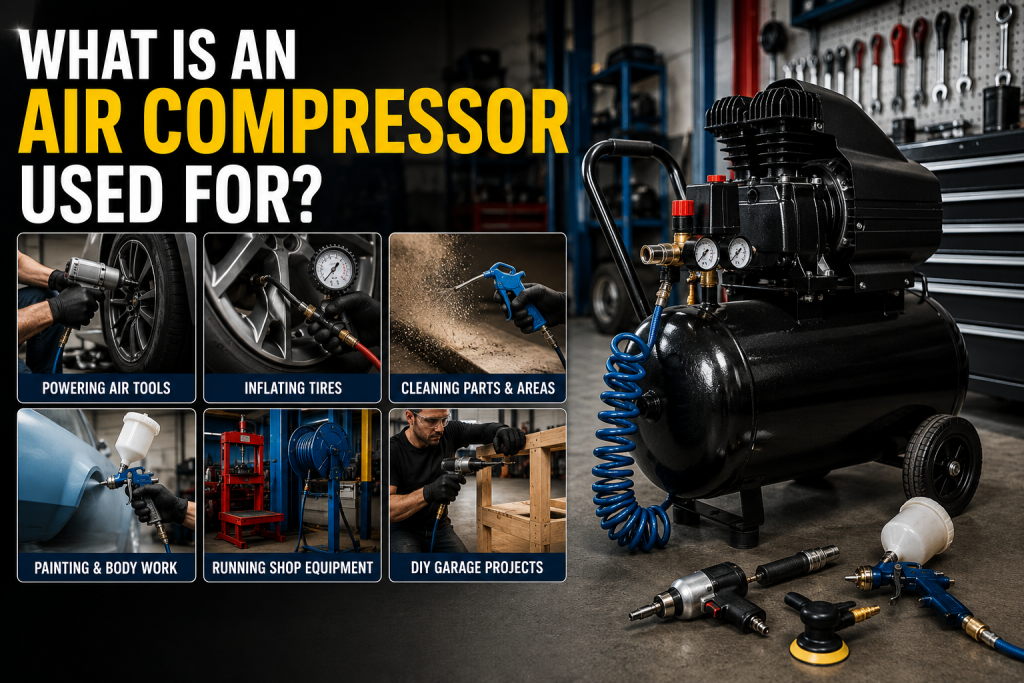
An air compressor stores pressurized air and releases it to power tools, inflate tires, clean parts, spray paint, and support shop equipment. For automotive users, it is one of the most versatile pieces of equipment in a garage, repair shop, or service bay.
If you have ever wondered what air compressor used for means in practical terms, the answer is simple: it gives you a reliable source of compressed air for jobs that require power, pressure, cleaning force, or steady airflow.
The right air compressor depends on the task you need to complete. A small portable compressor may be enough for tire inflation and light cleaning, while automotive air tools, painting, sanding, and professional shop work usually require more airflow, a larger tank, and stronger overall performance.
What Is an Air Compressor?
An air compressor is a machine that pulls in air, compresses it, stores it in a tank, and releases it through a hose when needed. The compressed air can then be used to power tools, inflate tires, blow away debris, or support other equipment.
Two important specs are PSI and CFM.
| Air Compressor Spec | What It Means |
|---|---|
| PSI | Pounds per square inch. This measures air pressure. |
| CFM | Cubic feet per minute. This measures how much air the compressor can deliver. |
| Tank size | The amount of compressed air the tank can store. |
The tool or task determines how much air the compressor needs to supply. Some jobs only need short bursts of air, while others require steady airflow for longer periods.
What Is an Air Compressor Used For?
Air compressors are used to power pneumatic tools, inflate tires, clean work areas, spray coatings, support tire service, and run equipment in automotive shops and home garages.
Common air compressor uses include:
| Use | Common Example |
|---|---|
| Powering air tools | Impact wrenches, air ratchets, die grinders, air hammers |
| Inflating tires | Cars, trucks, trailers, motorcycles, and shop tire service |
| Cleaning | Blowing dust, debris, and moisture from parts or work areas |
| Painting | Spray guns, primers, coatings, and body shop work |
| Shop equipment | Service bay tools and pneumatic systems |
| DIY garage work | Tire pressure, small tools, cleaning, and occasional repairs |
For automotive work, an air compressor can support everything from simple tire inflation to repeated professional repair tasks.
Common Air Compressor Uses in Auto Shops and Garages
1. Powering Air Tools
One of the most common air compressor uses is powering pneumatic tools. Air tools remain popular in garages and repair shops because they can be powerful, durable, and useful for repeated work.
Common air tools include:
| Air Tool | Common Use |
|---|---|
| Air impact wrench | Removing lug nuts, suspension bolts, and stubborn fasteners |
| Air ratchet | Speeding up fastening and removal in tight areas |
| Die grinder | Grinding, deburring, shaping, and surface prep |
| Air hammer | Cutting, chiseling, separating, and driving components |
| Air sander | Sanding panels, bodywork, and surfaces |
| Cut-off tool | Cutting bolts, brackets, sheet metal, and hardware |
Air tools usually require enough CFM to run properly. A compressor that does not deliver enough airflow may cause the tool to lose power or slow down during use.
2. Inflating Tires
Air compressors are commonly used for tire inflation. This is useful in home garages, repair shops, tire service bays, and mobile work setups.
An air compressor can help with:
| Tire Task | Why It Helps |
|---|---|
| Checking tire pressure | Supports routine maintenance |
| Adjusting tire pressure | Helps keep tires inflated correctly |
| Inflating low tires | Useful for cars, trucks, trailers, and equipment |
| Shop tire service | Supports repeated inflation work |
| Portable use | Helpful for roadside, mobile, or home garage tasks |
For basic tire inflation, a small portable air compressor may be enough. For a shop that services many tires each day, a larger compressor may be more practical.
3. Cleaning Parts and Work Areas
Compressed air is also useful for cleaning. In a garage or shop, it can help remove dust, dirt, and debris from work surfaces, tools, parts, and tight spaces.
Common cleaning uses include:
| Cleaning Task | Example |
|---|---|
| Blowing debris from workbenches | Clears dust, shavings, and dirt |
| Cleaning tools | Removes loose debris after use |
| Drying parts | Helps remove moisture after washing |
| Cleaning tight areas | Reaches places that brushes or rags may miss |
| Removing loose dust | Useful before inspection or assembly |
Compressed air should always be used carefully. Never aim compressed air at skin, eyes, or another person. Eye protection is important because debris can move quickly when blown by pressurized air.
4. Automotive Painting and Body Work
Air compressors are widely used in automotive painting and body work. Paint sprayers, primer guns, and other coating tools often rely on compressed air to atomize and apply material evenly.
For painting and body work, air quality matters. The compressor setup should provide clean, dry air because moisture and oil in the air line can affect paint quality.
Air compressor uses in body work include:
| Body Shop Task | Why Compressed Air Matters |
|---|---|
| Paint spraying | Helps apply paint evenly |
| Primer application | Supports surface prep and refinishing |
| Air sanding | Speeds up body panel preparation |
| Blowing off panels | Removes dust before coating |
| Drying surfaces | Helps prepare parts before refinishing |
Moisture control is especially important. Filters, moisture separators, and air dryers can help protect paint quality and reduce defects.
5. Running Shop Equipment
In professional repair shops, air compressors often support repeated daily work. A shop air compressor may feed multiple service bays, air hoses, hose reels, tire equipment, and pneumatic tools.
Professional shop uses include:
| Shop Use | Example |
|---|---|
| Service bay work | Powering air tools throughout the day |
| Tire service | Inflation and tire-related tasks |
| Pneumatic systems | Supporting equipment that runs on compressed air |
| Cleaning stations | Blowing off parts or work areas |
| Repeated fastening work | Faster tool operation in high-volume environments |
A professional shop usually needs a compressor with enough airflow and tank capacity to handle repeated use without constantly falling behind.
6. Supporting DIY Garage Projects
Air compressors are useful for DIY garage projects because they can support many small jobs with one piece of equipment.
DIY uses include:
| DIY Garage Use | Compressor Role |
|---|---|
| Tire inflation | Keeps vehicles, trailers, and equipment ready |
| Small air tools | Supports occasional fastening or repair work |
| Cleaning | Blows dust and debris from work areas |
| Occasional repairs | Helps with basic maintenance tasks |
| Hobby projects | Can support painting, cleaning, or light tool use |
For home use, portability may matter more than maximum tank size. A compact compressor can be easier to store and move around.
How to Choose the Right Air Compressor for the Job
Choosing an air compressor is not only about buying the biggest tank. The best choice depends on what tools you plan to use, how often you use them, and whether you need portability or shop-level performance.
PSI
PSI refers to pressure output. Many automotive air tools require a specific PSI range to operate correctly.
If the compressor cannot provide the required pressure, the tool may not perform as expected. Always check the tool’s recommended PSI before use.
CFM
CFM measures the amount of air the compressor can deliver. For many air tools, CFM is the most important spec.
Tools that run continuously, such as sanders and grinders, usually need more airflow than tools used in short bursts. If the compressor has low CFM, the tool may slow down or require frequent waiting while the tank refills.
Tank Size
Tank size affects how much compressed air is stored and how long the compressor can support a task before cycling.
| Tank Size Type | Best For |
|---|---|
| Smaller tanks | Tire inflation, light cleaning, portable use |
| Medium tanks | Occasional air tool use and garage work |
| Larger tanks | Repeated air tool use, painting, sanding, and shop work |
A larger tank can help maintain air supply, but the compressor still needs enough CFM for the tools being used.
Portability
Portable compressors are useful for home garages, mobile jobs, and occasional use. They are easier to move and store.
Stationary compressors are better suited for professional shops, service bays, and repeated work. They usually offer higher capacity and stronger air delivery.
Tool Requirements
Before choosing a compressor, check the air tool’s required PSI and CFM. This is especially important for impact wrenches, grinders, sanders, air hammers, paint guns, and tools that need steady airflow.
The compressor should match the job, not just the available space.
What Air Compressor Size Do You Need?
The right air compressor size depends on how you plan to use it. A compressor for tire inflation does not need the same capacity as one used for painting cars or running air tools all day.
| Use Case | General Compressor Guidance |
|---|---|
| Tire inflation and light cleaning | A small portable compressor may be enough |
| Occasional air tool use | A medium compressor with enough CFM for the tool is usually better |
| Impact wrenches | Choose a compressor that supports the tool’s airflow needs |
| Sanders and grinders | Look for stronger CFM output for more continuous use |
| Professional shop work | A larger compressor is usually better for repeated tasks |
| Painting and body work | Choose steady airflow and include moisture control |
Avoid choosing based on tank size alone. A large tank with poor airflow may still struggle with demanding tools.
Air Compressor Accessories to Consider
Air compressor accessories help connect tools, control pressure, manage air quality, and improve workflow. The right accessories can make the compressor easier and safer to use.
Common accessories include:
| Accessory | Why It Helps |
|---|---|
| Air hoses | Connect the compressor to tools and inflators |
| Hose reels | Keep hoses organized and easier to use |
| Regulators | Control outlet pressure for specific tools |
| Moisture filters | Help remove water from the air line |
| Air dryers | Support cleaner, drier air for painting and tools |
| Fittings and couplers | Connect hoses, tools, and accessories |
| Air tool oil | Helps lubricate pneumatic tools |
| Lubricators | Provide consistent lubrication for air tools |
| Tire inflators | Make tire pressure adjustment easier |
| Blow guns | Useful for cleaning and drying tasks |
For a garage or shop, air hoses, fittings, regulators, and moisture control are often just as important as the compressor itself.
Air Compressor Safety Tips
Air compressors are useful, but they should be used carefully. Pressurized air can cause injury if handled incorrectly.
Follow these safety tips:
| Safety Tip | Why It Matters |
|---|---|
| Wear eye protection | Debris can move quickly when blown by compressed air |
| Use the correct PSI | Too much pressure can damage tools or parts |
| Drain tank moisture when needed | Helps protect the tank and air system |
| Inspect hoses and fittings | Damaged hoses can leak or fail |
| Do not point compressed air at people | Compressed air can injure skin, eyes, or ears |
| Use clean, dry air for painting | Moisture can ruin paint quality |
| Follow manufacturer instructions | Each compressor and tool has specific requirements |
A safe setup helps protect the user, the tools, and the work being performed.
Browse Air Compressors and Air Tools at National Tool Warehouse
An air compressor can support tire inflation, pneumatic tools, cleaning, painting, and everyday shop work. Whether you are building a home garage setup or equipping a professional service bay, choosing the right compressor and accessories helps you work more efficiently.
You can explore a wide variety of high-quality air compressors at National Tool Warehouse, along with air tools, air hoses and reels, fittings, regulators, painting accessories, and shop tools for automotive repair, service bays, and DIY garage projects.
FAQs
What is an air compressor mainly used for?
An air compressor is mainly used to store and deliver pressurized air for tools, tire inflation, cleaning, painting, and shop equipment.
Can an air compressor run automotive air tools?
Yes, but the compressor must meet the PSI and CFM requirements of the tool. Impact wrenches, grinders, sanders, and air hammers often need more airflow than light-duty tools.
What size air compressor do I need for a garage?
For basic tire inflation and cleaning, a small portable compressor may work. For air tools or painting, a larger compressor with higher CFM and tank capacity is usually better.
Can you use an air compressor for painting cars?
Yes. Air compressors can be used for automotive painting, but the setup needs steady airflow, proper pressure control, and clean, dry air.
What accessories do I need with an air compressor?
Common accessories include air hoses, fittings, couplers, regulators, filters, moisture separators, hose reels, and air tool oil.