
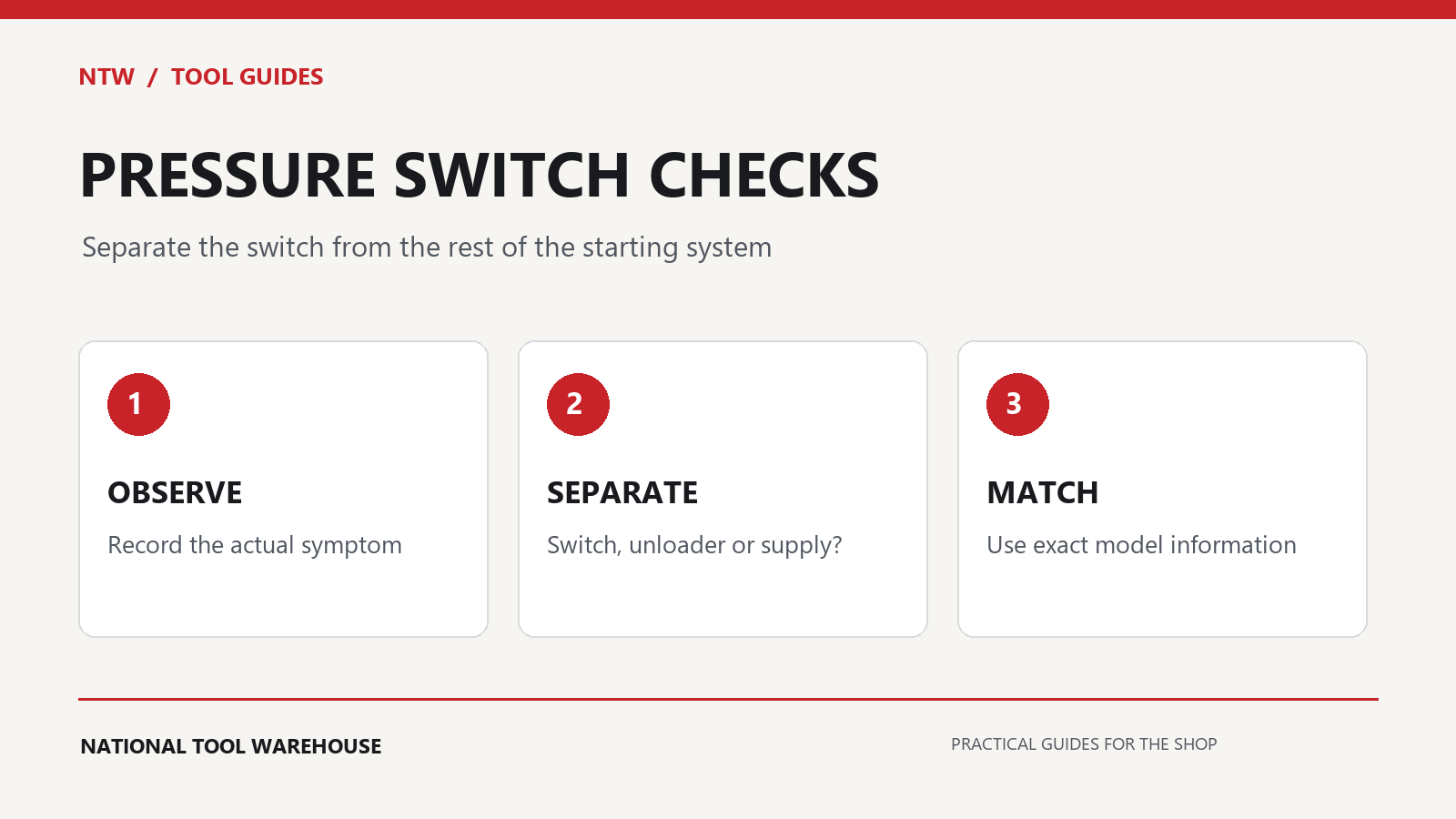
A compressor that will not restart does not automatically need a pressure switch. Power supply, motor protection, the unloader and the tank check valve can produce overlapping symptoms. Start with the model’s normal operating sequence and a clear record of what actually happens.
This guide concerns the common pressure-switch-controlled reciprocating shop compressor. Other designs use different control arrangements. Keep covers and guards fitted during normal observation. Electrical testing, pressure-component work and adjustments belong with a qualified service person following the exact machine’s instructions.
What the pressure switch does
The pressure switch controls starting and stopping in response to tank pressure. Cut-in is the point at which the compressor is called to restart; cut-out is the stopping point. The outlet regulator sets pressure delivered downstream and serves a different purpose.
Turning the regulator is not a repair for a compressor that fails to stop or restart. Likewise, a safety relief valve is a protective device, not a normal operating control. If the machine runs beyond its specified stopping point or repeatedly releases through the relief valve, stop using it and arrange service.
Build a symptom record
| Observed behavior | Possible areas for diagnosis | Record for service |
|---|---|---|
| Compressor is silent | Normal tank state, supply, control or motor protection | Tank indication, switch position and recent trips |
| Motor hums or trips | Supply, motor or failure to unload | Whether it starts differently with an empty tank |
| Air continues escaping after shutdown | Unloader/check-valve path or another leak | Where air escapes and whether tank pressure falls |
| Machine fails to stop normally | Control fault requiring service | Stop operation; do not force a repeat test |
| Short or frequent cycles | Leaks, demand, controls or installation | Workload and cycle pattern |
These are diagnostic branches, not confirmed causes. ROLAIR’s troubleshooting documentation lists several causes for a silent compressor or a humming motor; replacing the switch without separating those causes can leave the original problem in place.
Understand the unloader and check valve
On many small reciprocating compressors, the unloader releases trapped pressure in the pump’s discharge path after shutdown so the next start is not loaded by that trapped air. The tank check valve helps retain air in the receiver. The exact arrangement depends on the machine.
A brief release at shutdown may be part of normal operation. A continuing leak or difficult restart needs diagnosis against the model’s manual. Do not assume that any hiss at the switch means its electrical contacts have failed. Also avoid describing the unloader as a device that normally empties the entire receiver.
Checks an operator can document
- Record the model and serial number from the identification plate.
- Check the manual’s operating requirements and prescribed start sequence.
- Note visible gauge readings during normal operation, without opening covers.
- Record changes to the installation, power supply or connected workload.
- Describe any protective trip, overheating indication or leak location.
- Stop repeated restart attempts when the motor hums, trips or behaves abnormally.
Do not bridge switch contacts, defeat overload protection or increase a setting to make a fault disappear. Before any service work, the qualified person must isolate power and deal with stored pressure using the manufacturer’s procedure.
Should you adjust or replace the switch?
Use the machine’s service instructions and approved replacement information. A similar-looking switch may have different pressure settings, electrical ratings, connections or unloader provisions. Copying another compressor’s adjustment instructions is not a reliable way to establish a safe setting.
Give the supplier the model, serial number and original part identification, together with the symptom record. If replacement is required, have the repair checked through the prescribed operating cycle. The record should show that the original fault was corrected, not only that a new component was fitted.
Keep maintenance and capacity questions separate
If the compressor behaves normally but struggles with the workload, review air demand and supply capacity. Our air-compressor sizing guide addresses that decision. Our compressor oil guide covers lubricant selection; it does not diagnose an electrical starting fault.
For a broader symptom map, use the compressor repair hub. When comparing NTW air compressors, confirm the exact controls, installation requirements and service support for the model.
Manufacturer references
ROLAIR VT25BIG manual; ROLAIR model troubleshooting manual; California Air Tools maintenance guidance. Examples are model-specific, not universal settings.