
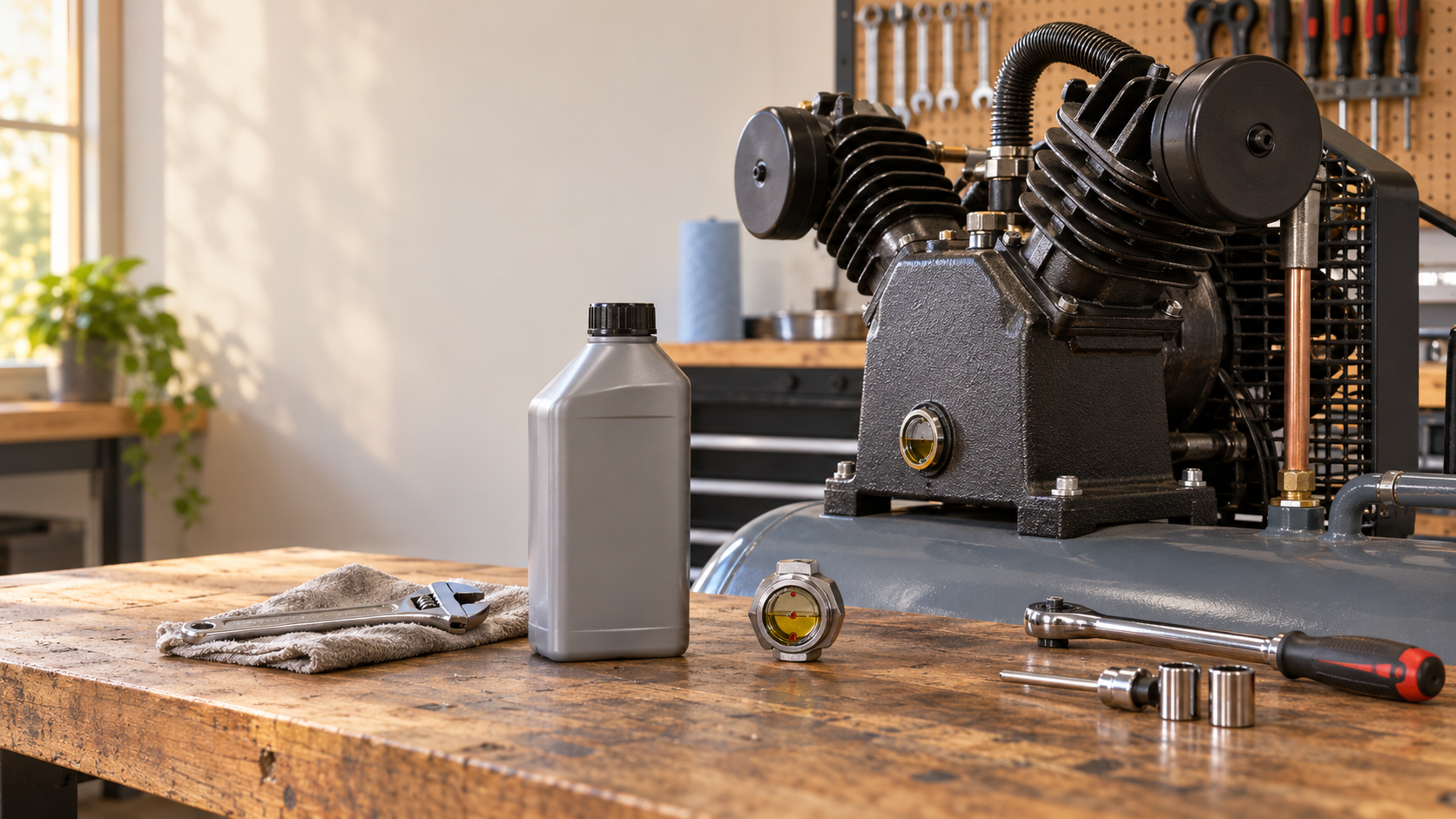
Air compressor oil is a maintenance item, but there is no single bottle that fits every machine. A small oil-lubricated piston compressor and an industrial rotary screw unit can require different fluids. Start with the model number and the manufacturer’s lubricant specification; then match the oil to the pump, operating conditions and service interval.
First, check whether the compressor needs oil
Some portable compressors use oil-free pumps and do not have an oil reservoir to fill. An oil-lubricated unit will normally have a crankcase fill point, dipstick or sight glass. The engine oil on a gas-powered compressor is a separate question from the compressor pump oil. Check both manuals before adding either fluid.
Match the oil to the pump
Reciprocating (piston) and rotary screw compressors have different lubrication demands. Even within one design, the approved oil may vary by model and operating temperature. Quincy Compressor’s lubricant guidance describes both pump types and emphasizes the manufacturer’s specification. Ingersoll Rand’s All Season Select is an example of a lubricant marketed for its reciprocating compressors; that does not make it a universal choice for every brand or screw compressor.
| Check | What to confirm |
|---|---|
| Pump design | Oil-free, reciprocating or rotary screw. |
| Required specification | Approved product, viscosity grade and any warranty condition in the model manual. |
| Operating conditions | Ambient temperature and duty pattern covered by that specification. |
| Service schedule | Oil level checks, oil change interval and filter requirements for the model. |
Mineral or synthetic?
Compressor lubricants can use mineral or synthetic base oils. Synthetic products may offer better deposit control or longer service life in specific machines, but the interval belongs to the oil and compressor combination. Do not adopt another model’s change interval from a marketing page. Quincy’s oil-selection guide explains the distinction and points owners back to their manual for change frequency.
Viscosity and additives matter
The label’s viscosity is useful only when it matches the manual’s range for your conditions. An oil that is too thick or thin for the pump can affect startup and protection. Use a lubricant formulated or explicitly approved for that compressor. Do not assume ordinary automotive engine oil is interchangeable: detergent packages and other additives may be unsuitable for a compressor pump. Never mix two oils unless the manufacturer confirms compatibility.
A sensible maintenance routine
- Record the compressor model and its specified oil before buying.
- Check the level using the manual’s procedure, with the machine in the specified state and position.
- Watch for leaks, unexpected consumption, unusual heat or a change in oil appearance.
- Change oil and any associated filter at the model’s required interval, using the stated quantity and disposal method.
- Keep a dated maintenance record so the next change is based on hours and conditions, not memory.
For the rest of your compressed-air setup, see our guide to choosing an air compressor for air tools and the sandblasting CFM and PSI guide. Browse air compressors at National Tool Warehouse for equipment that fits your job; verify the compressor’s exact lubricant requirement before ordering.