
A vehicle comes in for a condenser replacement. The underhood label says R-134a, but the refrigerant identifier rejects the sample. That changes the work order before anyone opens a line. Connecting the usual recovery machine could contaminate its stored refrigerant and interrupt the next job. Here is how to make the intake decision and document what happens to the charge.
What happens during refrigerant recovery?
Recovery transfers refrigerant out of the vehicle into suitable containment. Recycling cleans recovered refrigerant with approved equipment. Reclamation sends it through a process that restores it to a specified purity. A machine may perform several functions in one service cycle, but removing refrigerant alone does not prepare it for reuse.
In the United States, technicians servicing motor vehicle A/C for payment or barter need Section 609 certification and approved refrigerant-handling equipment. Intentional venting of R-134a or R-1234yf is prohibited. Recovered refrigerant must be properly recycled or reclaimed before reuse, even in the same vehicle. EPA’s vehicle A/C servicing requirements
What to check before assigning a machine
Read the vehicle’s refrigerant label and record the refrigerant designation and specified charge mass. Look up the service procedure for the exact vehicle. A missing label, replacement component or retrofit history deserves a second check. Fittings and pressure readings alone cannot establish what a previous repairer put in the system. A manifold gauge set helps a technician measure pressures. A refrigerant identifier answers a different question about the contents.
| Intake finding | Equipment example | Shop decision |
|---|---|---|
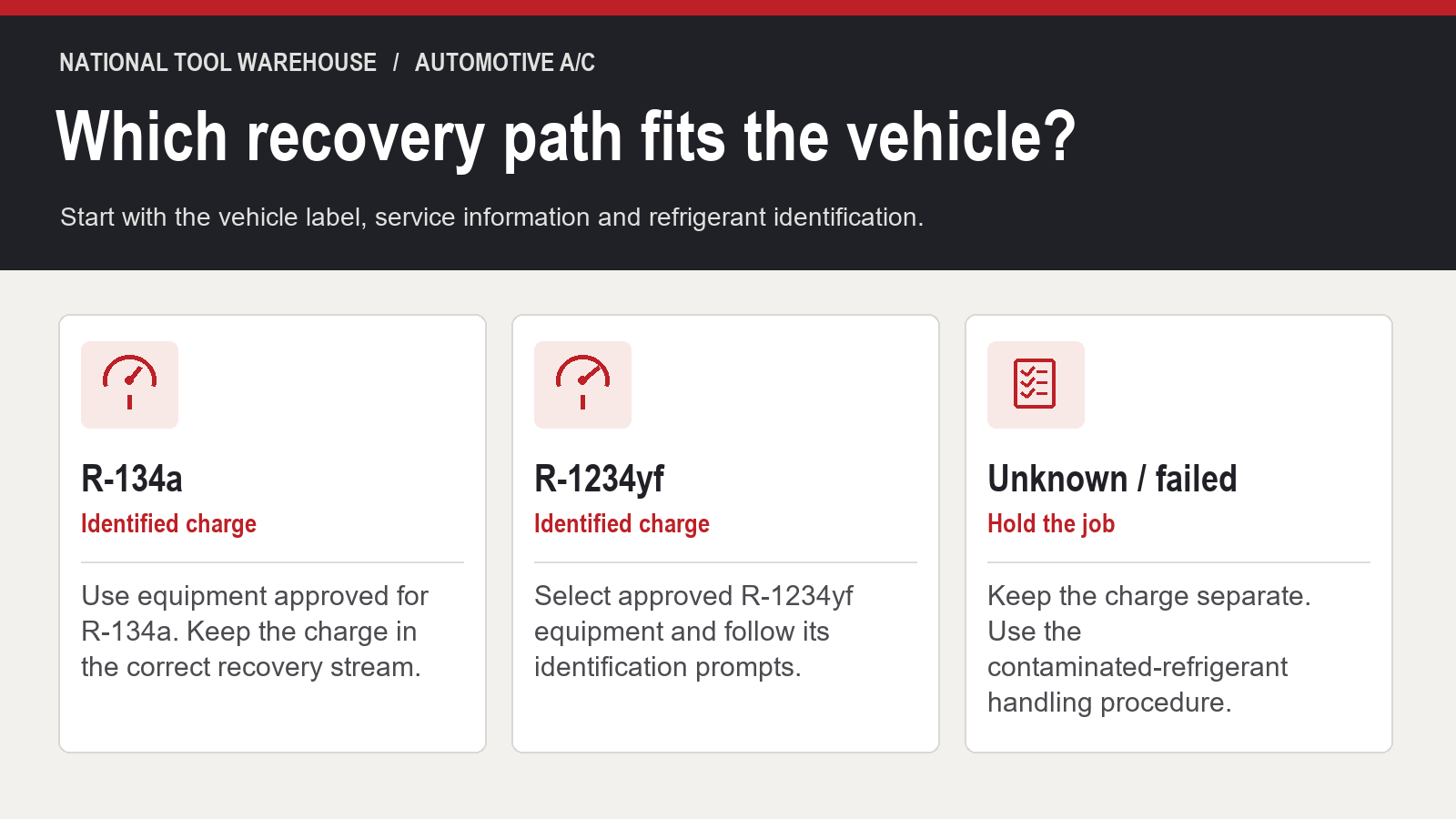
| R-134a identified | Robinair 34288NI, dedicated to R-134a | Confirm the machine is ready for this vehicle and follow its R-134a recovery cycle. |
| R-1234yf identified | Robinair AC1234-6, with an integrated identifier | Follow the machine’s sample and acceptance prompts before normal recovery. |
| Unknown, mixed or failed identification | Separate equipment suitable for contaminated refrigerant | Stop the normal cycle. Keep the charge out of the clean machine and its cylinder. |
The model numbers illustrate how specific the equipment choice can be. Check the installed machine’s manual for vehicle restrictions, prompts and service requirements. Compare the 34288NI specifications and AC1234-6 specifications. For other shop equipment, browse NTW A/C tools.
When the sample fails
Set aside the clean-service machine. Record the identifier’s result and flag the vehicle for the technician handling contaminated refrigerant. The shop needs suitable dedicated recovery equipment, a separate labeled recovery cylinder and a destination that accepts the material. Contact the handler before transport. If the shop cannot handle that charge, arrange specialist service while the system is still closed. EPA guidance on contaminated automotive refrigerants
What to put on the work order
For an accepted charge, the qualified technician runs the approved machine and follows the vehicle procedure before opening the system for repair. Record the vehicle specification, identifier result, machine used, recovered mass and where the refrigerant went. If the shop paused the job, record the reason and handoff instead. After the repair, enter the specified recharge amount and the actual amount dispensed in separate fields. A system that arrived leaking may yield much less refrigerant than it requires when repaired.
Intake checklist for the work order
- Vehicle, refrigerant label and OEM charge specification: ____
- Identification result and machine or specialist assigned: ____
- Recovered mass, cylinder or disposition, and technician: ____
- After repair, specified charge and actual amount dispensed: ____
Questions from the service bay
Can a vacuum pump recover refrigerant?
A vacuum pump evacuates air and moisture after refrigerant has been recovered. Use approved recovery equipment to capture the charge before evacuation.
Is a vehicle’s service port enough to identify its refrigerant?
The fitting and label tell you what the system was designed to use. A retrofit or contamination can make the actual contents different. Check the service history and use the appropriate identification procedure.
Can recovered refrigerant go straight back into the same car?
EPA requires proper recycling or reclamation first. Keep the record of recovered mass separate from the vehicle’s specified recharge mass.