
A small chip in the finish and a crack through the fiberglass underneath may look similar across the shop counter. They call for different purchases. Before buying a fiberglass repair kit, identify what the panel is made of, how deep the damage runs and whether the vehicle maker permits repair in that location. Then compare the resin, hardener, reinforcement and finishing supplies on the box.
Start with the panel and the damage
Check the vehicle maker’s body repair information for the exact part. A flexible plastic bumper cover, a sheet-molded composite panel (SMC) and a conventional fiberglass laminate can need different repair materials. A label that says “fiberglass” on the front of a kit is only the start. Look for explicit compatibility with the substrate and the intended repair in the product instructions.
On an otherwise sound cosmetic panel, damage confined to the finish may call for a refinishing product. A crack through the laminate raises a different question about reinforcement and access to the back of the panel. Where the damage reaches a mounting point, structural member or safety-system area, stop the kit selection and consult the vehicle maker’s repair or replacement procedure. This buying guide covers small, nonstructural work.
Compare two actual kit inventories
| What to compare | 3M Bondo 00420 | WEST SYSTEM 105-K |
|---|---|---|
| Resin system | Polyester fiberglass resin and matching liquid hardener | Premeasured 105 Resin and 205 Fast Hardener packets |
| Reinforcement | Fiberglass cloth | Fiberglass tape and fabric |
| Other contents | Mixing tray, mixing stick and plastic spreader | Adhesive and fairing fillers, cups, brushes, sticks, syringe and gloves |
| Intended use in the listing | 3M includes auto body applications | WEST SYSTEM describes small fiberglass boat repairs. Check separate automotive approval for a vehicle panel. |
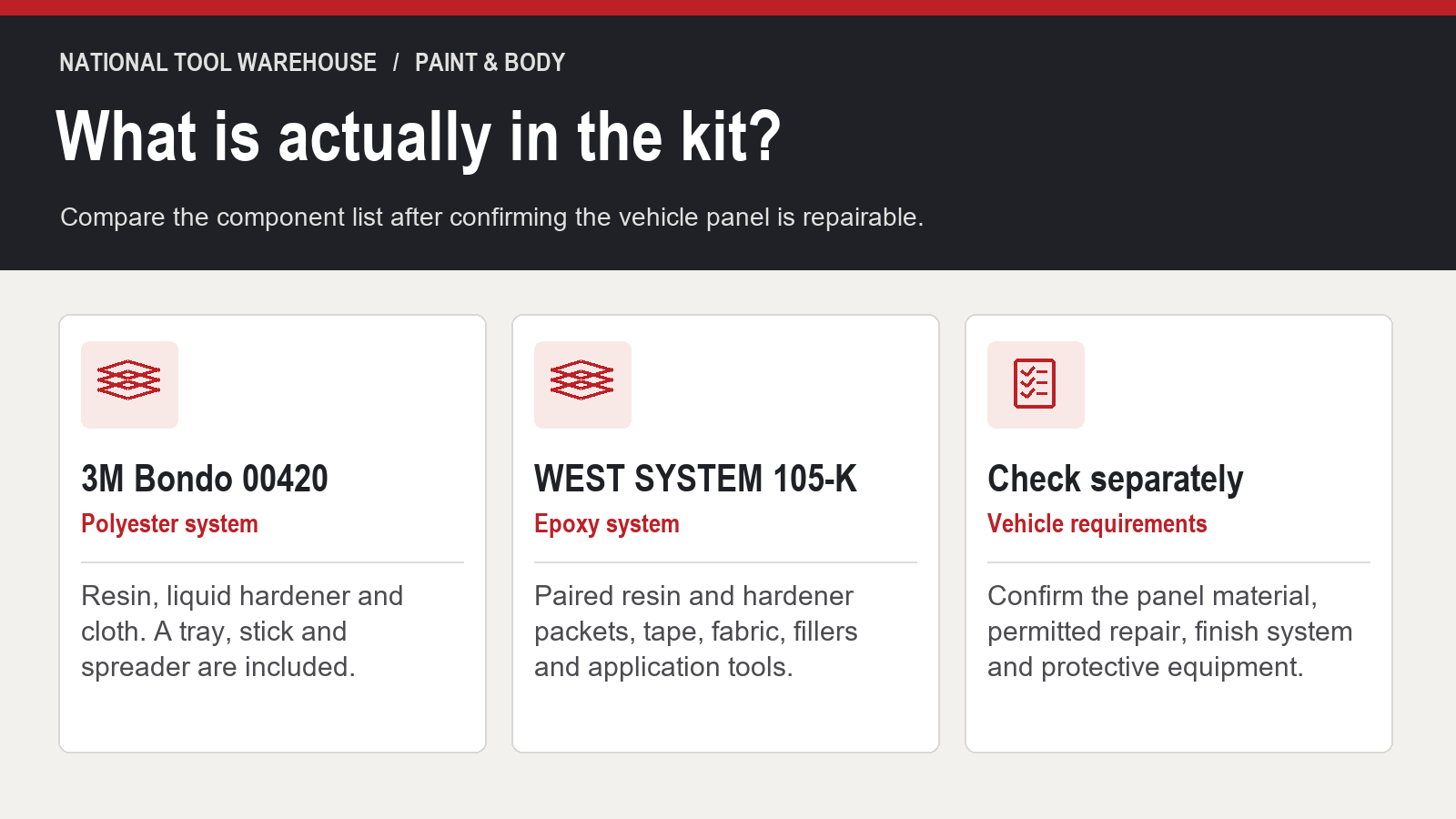
The 3M Bondo 00420 component list and WEST SYSTEM 105-K inventory show why two boxes called “fiberglass repair kit” can cover different needs. Treat the marine example as a way to read an epoxy kit list. It cannot establish suitability for a particular vehicle.
Read the shopping list from reinforcement to finish
First, check that the kit includes the resin’s specified hardener and the type and quantity of reinforcement called for in the repair information. A roll of cloth or mat sold by itself still needs a compatible resin system. Keep the supplied instructions with the components. Mix ratios, working times and cure conditions depend on the product.
Next, identify the materials for shaping and finishing. Cloth or tape provides reinforcement in a specified laminate repair. Fairing filler helps smooth a contour. Seeing filler in the box tells you little about how much fabric the kit supplies. The NTW body filler guide covers the finishing-material decision in more detail.
Finally, list the items the job still requires, such as approved surface preparation and finishing products, suitable abrasives, mixing supplies and protective equipment. Read the product’s safety data sheet before choosing gloves, eye protection and ventilation for the workspace. The mechanic PPE checklist is a starting point. When comparing NTW fiberglass supplies, check whether each listing is a complete kit, loose reinforcement or an individual component.
What to check before checkout
- Exact panel material and vehicle-maker repair reference.
- Approved resin system with its matched hardener.
- Reinforcement type, dimensions and quantity.
- Required finishing products, abrasives and mixing tools sold separately.
- Protective equipment and workspace controls from the safety data sheet.
Questions about choosing a kit
Will either kit repair a plastic bumper cover?
Identify the plastic and consult the vehicle procedure first. Choose a system explicitly intended for that substrate and repair location. The kit inventories above describe fiberglass products.
Can I use hardener left over from another kit?
Use the hardener and proportions specified for the exact resin. Keep unidentified or unmatched components out of the repair.
How can I tell whether one kit will be enough?
Use the repair procedure’s required reinforcement dimensions and layer count, then compare those with the package’s fabric size and usable resin quantity. If the box gives only a resin volume, ask for the reinforcement dimensions before ordering.