
Body Shop Tools: Essential Auto Body Tools for Repair and Refinishing
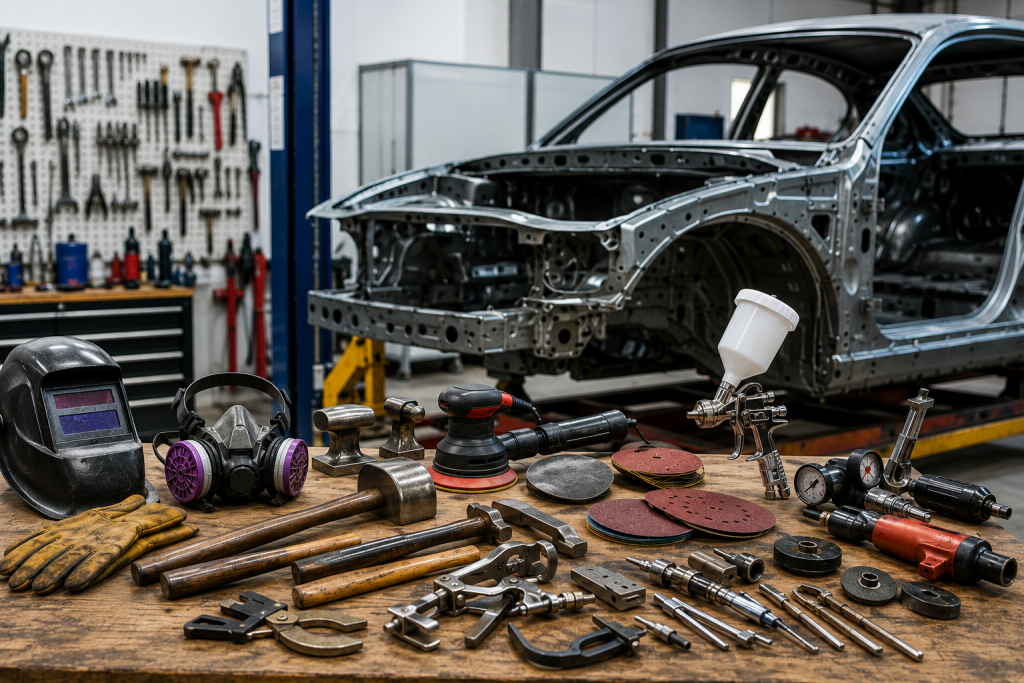
Body shop tools cover the hand tools, air tools, power tools, repair equipment, and finishing supplies used to repair, shape, prep, and refinish vehicle body panels. The right mix depends on the work you plan to do. A small dent repair job needs a different setup than panel replacement, collision pulling, or paint prep.
Two common refinishing decisions deserve a closer look: choosing body filler for the repair and matching spray-gun nozzle size to the coating.
This guide breaks the main body shop tool categories into practical groups so you can decide what belongs in a starter kit, what makes sense for a busy shop, and which tools are better saved for specialized repairs.
What Are Body Shop Tools?
Body shop tools are used for vehicle exterior repair and refinishing. They help technicians remove trim, pull dents, shape metal, cut damaged panels, grind welds, sand body filler, spray coatings, and protect themselves while working around dust, noise, sharp edges, solvents, and compressed air.
They overlap with mechanic tools, but they are not the same thing. Mechanic tools focus on engines, drivetrains, suspension, brakes, and fasteners. Body shop tools focus on panels, surface condition, structural alignment, paint preparation, and finish quality.
Essential Body Shop Tools by Job
A useful body shop tool list starts with the repair stage, not the tool name. Use the checklist below to decide which categories matter for your work.
| Repair stage | Common tools | Used for | Buy first? |
| Disassembly and trim | Trim removal tools, panel clip tools, screwdrivers, pliers | Removing moldings, clips, door panels, lights, and trim without damaging parts | Yes |
| Dent repair and pulling | Dent pullers, slide hammers, suction cups, stud weld pullers | Pulling dents and lifting low spots before shaping or filler work | Yes for dent work |
| Metal shaping | Body hammers, dollies, spoons, picks, slappers | Shaping damaged metal, supporting panels, and correcting highs and lows | Yes |
| Cutting and grinding | Cut-off tools, grinders, air saws, spot weld cutters | Removing damaged metal, cutting panels, cleaning welds, and opening spot welds | As needed |
| Sanding and surface prep | DA sanders, sanding blocks, files, abrasives, dust extraction | Leveling filler, feathering edges, preparing primer, and refining surfaces | Yes |
| Painting and refinishing | Spray guns, masking tools, prep carts, spreaders, mixing supplies | Applying primer, sealer, basecoat, clearcoat, filler, and refinishing materials | As needed |
| Welding and panel repair | MIG welder, spot welder, clamps, panel flanger, hole punch | Patch panels, panel replacement, spot weld repair, and metal joining | Pro/shop |
| Pulling and frame work | Pulling clamps, hydraulic body repair kits, measuring tools, frame equipment | Structural pulls, alignment checks, and collision repair setup | Pro/shop |
| Safety and shop setup | Eye protection, respirators, gloves, hearing protection, air hoses, compressors | Protecting the technician and supporting air-powered work | Yes |
Starter Body Shop Tools for Beginners
If you are building a home garage setup or buying tools for light auto body repair, start with tools that support common repairs and surface prep. You do not need a frame machine, spray booth, or every specialty puller on day one.
- Trim removal tools for taking off clips, moldings, interior panels, and small exterior parts before repair.
- A basic body hammer and dolly set for shaping small dents and supporting the back side of a panel.
- A dent puller or slide hammer for pulling dents when rear-panel access is limited.
- Sanding blocks, abrasives, and a DA sander for filler shaping, primer prep, and feathering edges.
- Body filler spreaders, mixing boards, and surface prep supplies for clean filler application.
- Safety gear, including eye protection, gloves, hearing protection, and a respirator when sanding or spraying.
Professional Body Shop Tools and Equipment
A professional shop needs more depth because the work is broader and the stakes are higher. Collision repair, panel replacement, welding, refinishing, and structural measurement require tools that go beyond a basic dent repair kit.
Common professional upgrades include welders, spot weld cutters, pulling clamps, hydraulic body repair kits, dust extraction, dedicated paint and prep tools, panel stands, advanced measuring tools, and larger shop equipment. These tools make sense when the repair volume, material type, or job complexity justifies them.
For professional work, also think about consumables and support equipment. Abrasives, sanding discs, masking supplies, air hoses, fittings, regulators, replacement tips, filters, and personal protective equipment can affect productivity just as much as the headline tool purchase.
How to Choose Body Shop Tools
Match the tool to the repair type
Dent repair, panel replacement, paint prep, and structural pulling all need different tools. Start with the repairs you perform most often, then build outward. Buying a tool because it looks useful is less reliable than buying it because it solves a repeat job in your shop.
Choose the right power source
Many body shop tools are pneumatic because air tools can be compact, durable, and useful for sanding, cutting, hammering, and grinding. If you choose air tools, check compressor capacity, hose size, fittings, and moisture control. Cordless and electric tools can be useful when portability matters or when a shop does not have a large air system.
Think about materials
Steel, aluminum, plastic, and modern vehicle panels may need different repair approaches. Avoid assuming one hammer, sander, welder, or dent puller fits every panel. When working on newer vehicles, confirm repair procedures and material compatibility before cutting, welding, pulling, or sanding.
Do not forget safety
Body work can create dust, sharp metal, sparks, fumes, and high noise levels. Safety equipment is not an accessory at the end of the list. It belongs in the first purchase plan, especially if you sand, grind, weld, spray, or work with compressed air.
Body Shop Tools to Buy First
For a practical starter setup, prioritize tools that support inspection, disassembly, small dent repair, shaping, and surface prep. These tools cover many common jobs without pushing you into expensive equipment before you need it.
- Trim and panel removal tools
- Body hammer and dolly set
- Dent puller or slide hammer
- Sanding blocks and abrasives
- DA sander or other auto body sander
- Body filler spreaders and prep supplies
- Basic clamps and locking pliers
- Eye protection, gloves, hearing protection, and respirator
From there, add cutting tools, grinders, air hammers, paint guns, welders, pulling tools, and larger equipment based on the work you actually perform.
Common Mistakes When Buying Auto Body Tools
- Buying specialty tools before the basic repair workflow is covered.
- Choosing the cheapest sanding or cutting tools, then fighting poor control or inconsistent results.
- Forgetting consumables such as abrasives, masking materials, spreaders, fittings, and filters.
- Buying pneumatic tools without confirming compressor output, hose size, and air quality.
- Using mechanic tools where body-specific tools would protect the panel or trim better.
- Skipping safety equipment until after dust, sparks, fumes, or noise become a problem.
FAQs
What tools do you need for a body shop?
Most body shops need tools for disassembly, dent repair, metal shaping, cutting, grinding, sanding, painting, welding, clamping, pulling, measuring, and safety. A small DIY setup can start with trim tools, hammers and dollies, sanding tools, a dent puller, filler tools, and PPE. A professional shop usually needs air tools, welders, pulling equipment, dust control, refinishing tools, and more specialized measuring equipment.
What auto body tools should beginners buy first?
Beginners should start with trim removal tools, a body hammer and dolly set, sanding blocks, abrasives, a DA sander, a dent puller, body filler spreaders, basic clamps, and safety gear. Those tools support common light repairs and prep work before you invest in larger shop equipment.
What is the difference between body shop tools and mechanic tools?
Mechanic tools are mainly used for engines, brakes, suspension, drivetrain work, and fasteners. Body shop tools are used to repair, shape, prep, and refinish vehicle panels. Some tools overlap, but body tools are designed around surface quality, panel access, dent repair, sanding, welding, pulling, and paint preparation.
Do I need air tools for auto body work?
Air tools are common in body shops because they are useful for sanding, cutting, grinding, drilling, and hammering. They are not the only option. Electric and cordless tools can work for some jobs, but if you choose pneumatic tools, make sure your compressor, hose, fittings, and moisture control can support them.
What tools are used for dent repair?
Dent repair may use suction cups, slide hammers, stud weld pullers, pulling tabs, body hammers, dollies, spoons, picks, and sanding tools. The best choice depends on dent location, panel access, paint condition, and whether the repair will be painted afterward.
What tools are needed for sanding and painting a car?
Sanding and painting usually require sanding blocks, abrasives, DA sanders, masking supplies, body filler tools, primer and paint prep supplies, spray guns, air supply equipment, filters, respirators, gloves, and clean work surfaces. Paint work also requires careful attention to ventilation and safety requirements.
Are professional body shop tools worth it for DIY work?
Professional tools can be worth it if you do frequent repairs, restoration work, or jobs that require precision and repeatability. For occasional DIY work, start with reliable essentials and add specialty tools only when the repair justifies them.
Find the Right Body Shop Tools for the Job
The best body shop tool setup is built around the work you do most often. Start with the essentials for trim removal, dent repair, shaping, sanding, and safety. Then add air tools, welders, paint tools, pulling equipment, and larger shop equipment as your repair work becomes more advanced.
National Tool Warehouse can support that process by helping shoppers compare reliable paint and body tools, air tools, sanding supplies, dent repair equipment, and shop accessories all in one place.