
Toolbox Talk: What It Is, Topics, and How to Run One
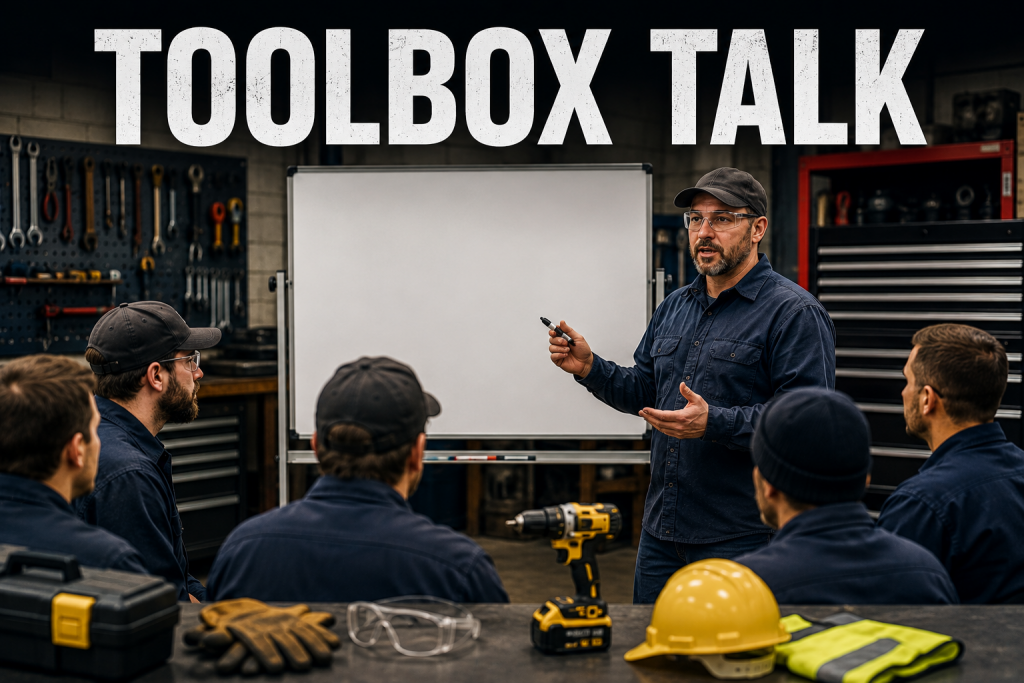
A toolbox talk is a short safety meeting focused on one workplace hazard, task, tool, or safe work practice. In shops, garages, warehouses, and jobsites, toolbox talks help teams review risks before work begins, reinforce safe habits, and give workers a chance to raise concerns.
For a garage-focused discussion, use the equipment choices in our floor-jack versus bottle-jack guide and the pre-work isolation checks in our compressor troubleshooting guide as starting points. Adapt the discussion to your workplace’s procedures.
Toolbox talks are often used before a shift, before a high-risk task, after a near miss, when new equipment is introduced, or when a recurring safety issue needs attention. They do not need to be long or complicated. The goal is to make the topic clear, practical, and easy to apply right away.
For shop owners, supervisors, technicians, contractors, and warehouse leads, regular toolbox talks can support safer work, better communication, and stronger awareness around the tools, equipment, and conditions workers deal with every day.
What Is a Toolbox Talk?
A toolbox talk is a brief, focused safety discussion usually led by a supervisor, team lead, safety manager, foreman, shop manager, or experienced worker. It is sometimes called a toolbox safety talk, safety talk, tailgate talk, or daily safety meeting.
The best toolbox talks are short, specific, and connected to the work being done that day. Instead of covering every possible safety rule, a good toolbox talk focuses on one topic and explains what workers should look for, what can go wrong, and what safe steps they should follow.
A toolbox talk usually includes:
- One clear safety topic
- Practical examples from the work area
- The hazard or risk being discussed
- Safe work steps
- Tools, equipment, or PPE involved
- Questions and feedback from workers
- Action items or follow-up if hazards are found
For example, a toolbox talk in an automotive shop may focus on eye protection while grinding, safe use of air tools, battery charging safety, lifting heavy parts, or keeping walkways clear of cords and hoses.
Why Are Toolbox Talks Important?
Toolbox talks are important because they help teams pause before work begins and think about the hazards that may be present. This is especially useful in busy shops, garages, warehouses, and jobsites where people may be moving quickly, using tools, handling materials, or working around equipment.
Toolbox talks can help teams:
- Review hazards before work begins
- Reinforce safe work practices
- Reduce complacency
- Improve communication
- Encourage workers to speak up
- Address near misses or recurring issues
- Remind workers to use the right tools and PPE
- Support a stronger safety culture
OSHA notes that education and training help workers and managers understand workplace hazards and controls, and that peer-to-peer training, on-the-job training, and worksite demonstrations can be effective ways to communicate safety concepts.
Toolbox talks should also be two-way conversations. OSHA emphasizes that workers often know the most about hazards connected to their jobs and that effective safety programs encourage workers to provide input and report concerns.
Tool Storage and Housekeeping
Good housekeeping supports safer work and better productivity.
Cover:
- Returning tools after use
- Keeping benches clear
- Storing sharp tools safely
- Organizing sockets, bits, and accessories
- Preventing trip hazards
- Keeping exits and walkways clear
Tool storage also helps workers find the right tool faster and avoid using the wrong tool for the job.
When Should You Hold a Toolbox Talk?
A toolbox talk can be held whenever a short safety discussion would help the team prepare for work or respond to a hazard.
Common times to hold a toolbox talk include:
- Before the start of a shift
- Before a high-risk task
- Before using new tools or equipment
- After an incident or near miss
- When a hazard has been identified
- When seasonal risks change, such as heat, cold, ice, or wet floors
- When new workers or temporary workers join the team
- When safety rules or procedures are updated
- When a recurring issue needs to be corrected
Toolbox talks do not need to be long to be useful. A five- or ten-minute discussion can be enough if the topic is clear and directly connected to the work being done.
Toolbox Talk Template: What to Include
A simple toolbox talk template makes safety meetings easier to prepare and more consistent. Use the same basic structure each time so workers know what to expect.
1. Topic
Choose one clear topic. Examples include eye protection, electrical safety, lifting safety, hand tool safety, power tool safety, compressed air safety, housekeeping, or fire prevention.
Avoid combining too many topics into one talk. A focused discussion is easier to understand and remember.
2. Hazard
Explain the hazard in plain language.
For example:
“Loose extension cords can create trip hazards and may also become damaged if they are run through high-traffic areas.”
The hazard should be specific enough that workers can recognize it in their own work area.
3. Why It Matters
Explain what can happen if the hazard is ignored.
Potential consequences may include:
- Injuries
- Equipment damage
- Fire risk
- Electrical shock
- Slips, trips, or falls
- Lost time
- Rework or downtime
Workers are more likely to follow safe practices when they understand why the topic matters.
4. Safe Work Steps
Give practical actions workers should follow.
For example:
“Inspect cords before use, keep walkways clear, use the correct extension cord rating, and remove damaged cords from service.”
Safe work steps should be short, direct, and easy to apply immediately.
5. Tools and PPE
Mention the tools, PPE, or safety equipment needed for the task.
Examples include:
- Safety glasses
- Face shields
- Gloves
- Hearing protection
- Proper lifting equipment
- Rated electrical tools
- Correct hand tools
- Tool storage
- Spill control supplies
If the toolbox talk is about a specific tool or PPE item, show it during the talk whenever possible.
6. Questions and Feedback
Ask workers if they have seen the hazard or have suggestions. OSHA recommends giving workers opportunities to ask questions and provide feedback during and after training.
Useful questions include:
- Have you seen this hazard in our work area?
- What could go wrong with this task?
- What should we inspect before starting?
- What PPE is needed?
- Is there anything we should fix before work begins?
7. Action Items
Document anything that needs to be fixed, replaced, cleaned up, reported, or reviewed later.
Examples include:
- Replace damaged extension cord
- Refill PPE station
- Clear blocked walkway
- Repair damaged tool guard
- Inspect air hose fittings
- Update procedure
- Follow up with maintenance
A toolbox talk is more valuable when concerns lead to action.
How to Run an Effective Toolbox Talk
An effective toolbox talk should be easy to understand and directly connected to the real work being done.
Keep It Focused
Cover one topic at a time. If the talk is about power tool safety, stay focused on tool inspection, correct accessories, guards, PPE, and safe use. Save unrelated topics for another day.
Keep It Practical
Use examples from the actual shop, garage, warehouse, or jobsite. Workers respond better when the topic feels connected to their daily tasks.
For example, instead of giving a generic talk about slips and trips, point out common shop hazards like air hoses across walkways, oil spills near service bays, clutter around toolboxes, or cords running through work areas.
Use Real Tools or PPE
If the topic is hand tool safety, show examples of damaged handles, worn grips, or incorrect tool use. If the topic is eye protection, show the correct safety glasses, goggles, or face shield.
Demonstrations can make the talk more useful than a simple lecture.
Encourage Worker Input
Ask the team what hazards they have noticed. Workers are often closest to the task and may see risks that supervisors miss. A toolbox talk should create space for workers to speak up before a problem becomes an incident.
Make It Interactive
Instead of reading from a script, ask questions:
- What could go wrong with this task?
- What PPE is needed?
- What should we inspect before starting?
- Has anyone seen a near miss related to this topic?
- What would make this job safer?
Document the Talk
Keep a simple record of:
- Date
- Topic
- Attendees
- Main points covered
- Questions or concerns raised
- Follow-up actions
Documentation helps track what has been covered and what still needs attention.
Follow Up
If a worker raises a hazard, make sure it is addressed. Toolbox talks lose value when concerns are discussed but not acted on.
OSHA describes hazard identification as a proactive, ongoing process that includes reviewing hazard information, inspecting the workplace, investigating incidents and near misses, and prioritizing corrective actions.
Toolbox Talk Topics for Shops, Garages, and Warehouses
The best toolbox talk topics are relevant to the work being done. Here are practical topics for shops, garages, warehouses, and service environments.
Hand Tool Safety
Hand tool safety is a useful topic for almost any shop or garage.
Cover:
- Using the right tool for the job
- Inspecting tools before use
- Avoiding damaged handles or worn grips
- Keeping cutting tools sharp and stored safely
- Preventing hand injuries
- Returning tools after use
Damaged or misused hand tools can lead to cuts, pinches, strains, and impact injuries.
Power Tool Safety
A power tool safety toolbox talk should focus on inspection, correct use, PPE, and storage.
Cover:
- Inspecting cords, batteries, guards, and switches
- Using the correct bit, blade, wheel, or attachment
- Keeping hands clear of moving parts
- Wearing eye and hearing protection
- Removing damaged tools from service
- Storing tools properly after use
This is a good place to show examples of safe and unsafe tool conditions. You can also reference electric and cordless tools when discussing correct tool selection and inspection.
Electrical Safety
Electrical safety matters in shops, warehouses, and service bays.
Cover:
- Damaged cords
- Overloaded outlets
- Battery charging safety
- Wet work areas
- Lockout/tagout awareness where relevant
- Using appropriate testers and rated tools
- Removing damaged electrical tools from service
Electrical safety toolbox talks should remind workers to avoid makeshift repairs and report damaged cords, plugs, chargers, or outlets.
PPE and Eye Protection
A PPE toolbox talk can cover when and how to use personal protective equipment.
Cover:
- Safety glasses
- Face shields
- Gloves
- Hearing protection
- Respirators where required
- Protective clothing
- Proper fit and condition
This topic is especially useful before grinding, cutting, welding, using compressed air, handling chemicals, or working around flying debris.
Slips, Trips, and Falls
Slips, trips, and falls are common workplace hazards. In a shop or warehouse, they can be caused by spills, clutter, cords, hoses, poor housekeeping, uneven surfaces, or wet floors.
Cover:
- Cleaning spills quickly
- Keeping walkways clear
- Routing cords and hoses safely
- Maintaining good lighting
- Storing tools and parts properly
- Reporting uneven or damaged flooring
OSHA notes that some hazards, including housekeeping and tripping hazards, should be fixed as they are found.
Lifting and Material Handling
A lifting safety toolbox talk should focus on planning the lift and using the right help or equipment.
Cover:
- Proper lifting technique
- Team lifting
- Using carts or lifting equipment
- Avoiding twisting while carrying loads
- Planning the path before moving items
- Checking weight and balance before lifting
This topic is useful in automotive shops, warehouses, stockrooms, and any area where workers move parts, tools, tires, equipment, or supplies.
Air Tool and Compressor Safety
Air tools and compressors are common in garages and repair shops, but they need to be used correctly.
Cover:
- Inspecting hoses and fittings
- Using the correct air pressure
- Wearing eye protection
- Never pointing compressed air at people
- Securing air connections
- Maintaining tools
- Draining moisture from compressors when required
Air hoses can also create trip hazards, so include housekeeping and hose routing in the discussion.
Welding and Hot Work Safety
Welding and hot work require special attention because of fire, heat, sparks, fumes, and eye hazards.
Cover:
- Fire prevention
- Ventilation
- Eye and face protection
- Gloves and protective clothing
- Hot surfaces
- Nearby flammable materials
- Fire extinguisher access
- Safe storage of cylinders where applicable
A welding toolbox talk should be specific to the type of hot work being performed.
Battery and Charging Safety
Battery and charging safety is important in shops, garages, warehouses, and service vehicles.
Cover:
- Charging batteries in appropriate areas
- Inspecting chargers and cords
- Avoiding damaged batteries
- Keeping batteries away from heat or fluids
- Following manufacturer instructions
- Keeping charging areas clean and ventilated where needed
- Reporting swollen, leaking, or damaged batteries
This can apply to vehicle batteries, cordless tool batteries, jump starters, chargers, and shop equipment.
Tool Storage and Housekeeping
Good housekeeping supports safer work and better productivity.
Cover:
- Returning tools after use
- Keeping benches clear
- Storing sharp tools safely
- Organizing sockets, bits, and accessories
- Preventing trip hazards
- Keeping exits and walkways clear
Tool storage also helps workers find the right tool faster and avoid using the wrong tool for the job.
Chemical and Fluid Safety
Shops often use cleaners, oils, solvents, fuels, coolants, paints, and other chemicals.
Cover:
- Reading labels and SDS
- Handling chemicals safely
- Wearing gloves and eye protection
- Storing chemicals properly
- Cleaning spills quickly
- Keeping containers closed
- Reporting leaks or damaged containers
This topic should be specific to the fluids and chemicals actually used in the workplace.
Fire Prevention
Fire prevention is a useful toolbox talk topic for garages, warehouses, and jobsites.
Cover:
- Flammable storage
- Extension cord use
- Hot work
- Battery charging areas
- Fire extinguisher access
- Keeping exits clear
- Cleaning up oily rags or combustible debris
Make sure workers know where fire extinguishers, exits, and emergency equipment are located.
Example Toolbox Talk: Power Tool Safety
Topic: Power Tool Safety
Hazard: Cuts, kickback, flying debris, electrical shock, and hand injuries.
Why it matters: Power tools can cause serious injuries when guards are removed, accessories are damaged, or workers use the wrong tool for the job.
Safe steps:
- Inspect the tool before use.
- Check cords, batteries, guards, and switches.
- Use the correct blade, bit, wheel, or accessory.
- Wear eye protection and hearing protection where needed.
- Keep hands away from moving parts.
- Remove damaged tools from service.
- Store tools properly after use.
Discussion question: What power tool hazard have you seen in our shop recently?
Follow-up action: Inspect commonly used power tools and remove damaged tools from service before work begins.
Toolbox Talk Checklist
Use this checklist to prepare and run a simple toolbox talk.
Before the Talk
- Choose one topic.
- Connect it to the work being done.
- Gather any tools or PPE to demonstrate.
- Prepare 3–5 key points.
- Review any recent near misses or hazards.
During the Talk
- Keep it short and practical.
- Ask questions.
- Encourage worker feedback.
- Demonstrate the right method if possible.
- Confirm the team understands the key points.
After the Talk
- Record attendance.
- Document concerns.
- Assign follow-up actions.
- Fix hazards where possible.
- Revisit unresolved issues.
Common Toolbox Talk Mistakes to Avoid
A toolbox talk should be practical and useful. Avoid these common mistakes:
- Trying to cover too many topics at once
- Reading a script without discussion
- Using generic examples that do not match the worksite
- Ignoring worker feedback
- Failing to follow up on hazards
- Holding talks too rarely
- Not documenting attendance or action items
- Focusing only on rules instead of real work practices
- Not involving new or temporary workers
- Using language workers do not understand
OSHA recommends that training be provided in language and literacy levels workers can understand.
Tools and PPE That Support Safer Work
Toolbox talks are most effective when teams also have access to the right tools, PPE, storage, and shop equipment needed to work safely.
Useful safety-related items may include:
- Safety glasses
- Gloves
- Hearing protection
- Respirators
- Face shields
- Tool storage
- Battery tools
- Hand tools
- Electric and cordless tools
- Air tools
- Lifting equipment
- Welding PPE
- Shop supplies
- Spill control products
- Lighting and technician accessories
A toolbox talk can remind workers what to use, but the workplace also needs the correct equipment available and in good condition.
FAQs
What is a toolbox talk?
A toolbox talk is a short safety meeting focused on one hazard, task, tool, or safe work practice. It is usually held before work begins or before a specific job.
How long should a toolbox talk be?
A toolbox talk is usually brief. Many teams keep it short enough to cover one topic clearly while still allowing time for questions and worker feedback.
What should be included in a toolbox talk?
A toolbox talk should include the topic, hazard, why it matters, safe work steps, required tools or PPE, worker questions, and any follow-up actions.
Who should lead a toolbox talk?
A supervisor, safety manager, team lead, foreman, shop manager, or experienced worker can lead a toolbox talk.
What are good toolbox talk topics?
Good toolbox talk topics include hand tool safety, power tool safety, PPE, slips and trips, lifting safety, electrical safety, air tool safety, welding safety, chemical safety, housekeeping, and fire prevention.
Are toolbox talks required by OSHA?
Toolbox talks can support workplace safety training and communication, but requirements depend on the workplace, task, hazard, and applicable OSHA standards. Employers should follow the specific safety and training requirements that apply to their work.
How do you make toolbox talks more effective?
Make toolbox talks more effective by keeping them focused, using real examples, involving workers, demonstrating safe practices, documenting action items, and following up on reported hazards.
Support Safer Work in Your Shop or Jobsite
Toolbox talks are a simple way to keep safety visible, practical, and connected to daily work. They help teams review hazards, ask questions, share concerns, and take action before problems lead to injuries or downtime.
Employers and supervisors should follow applicable OSHA standards, company policies, manufacturer instructions, and site-specific safety requirements.
Browse shop safety gear, hand tools, electric and cordless tools, air tools, lifting equipment, welding supplies, tool storage, and shop equipment at National Tool Warehouse to support safer work in garages, shops, warehouses, and service bays.