
Sealing Adhesives: How to Choose the Right Product for the Job
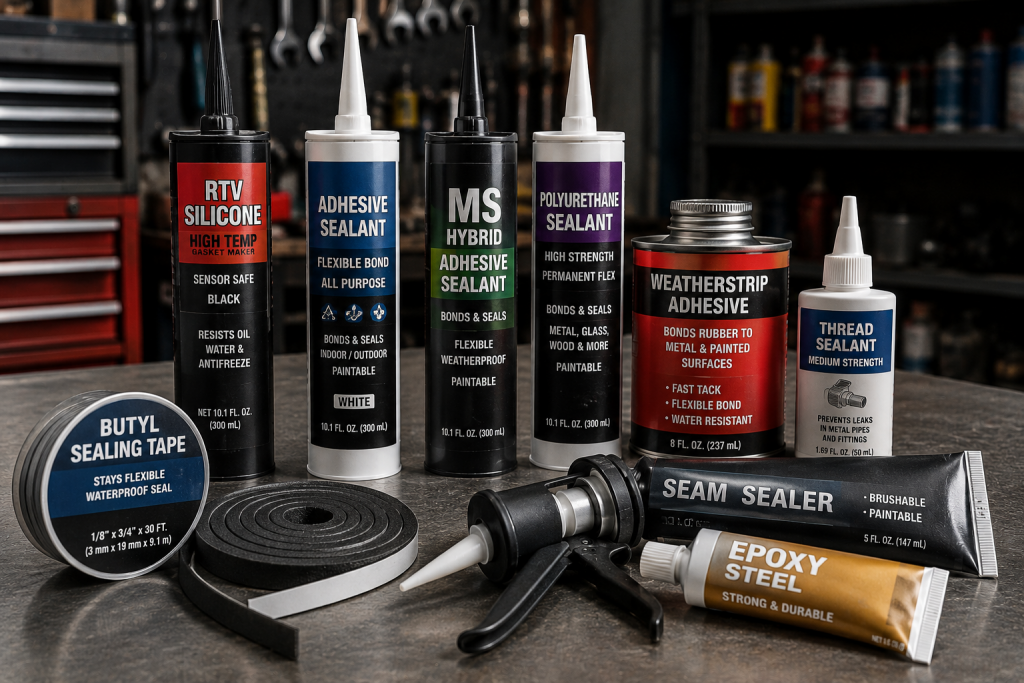
Sealing adhesives cover a wide group of products used to bond parts, seal gaps, block moisture, resist vibration, or do some combination of those jobs. The right choice depends less on the label and more on the repair: what materials are being joined, how much movement the joint will see, what it will be exposed to, and whether the product needs to hold parts together or keep air, water, oil, dust, or road grime out.
Sealing a joint and smoothing a damaged panel are different tasks. Compare body filler and Bondo products, then review the wider body-shop equipment checklist for preparation and application tools.
For automotive repair, shop maintenance, equipment work, and general projects, that distinction matters. A rigid adhesive can fail if the joint needs to flex. A flexible sealant can fail if it is asked to hold weight or act like a structural bond. Use this guide to narrow the field before you buy.
What Are Sealing Adhesives?
The phrase sealing adhesives is often used as a catch-all for products that bond and seal. In practice, the category can include RTV silicone, polyurethane sealants, MS or SMP hybrid sealants, butyl tape, seam sealers, weatherstrip adhesives, thread sealants, gasket makers, epoxies, and pressure-sensitive sealing tapes.
Some of these products are mainly adhesives. They are made to hold two surfaces together. Others are mainly sealants. They are made to fill a gap and stay flexible enough to keep a barrier intact as the joint moves. Hybrid adhesive sealants sit in the middle and can provide both bond strength and gap sealing when the product is rated for the materials and environment.
Adhesive vs Sealant: The Quick Difference
Use an adhesive when the job needs holding power. Adhesives are usually chosen for bonding trim, panels, fabric, plastic, metal, rubber, or other materials where the surfaces need to stay attached.
Use a sealant when the job needs a barrier. Sealants are usually chosen for seams, joints, gaps, leak paths, weather exposure, or areas that need flexibility as materials expand, contract, or vibrate.
Use a hybrid adhesive sealant when the job needs both. These products can be helpful for exterior repairs, body seams, marine or equipment applications, and other work where a joint needs to stay sealed while still carrying some bond load.
A simple rule helps: if the part must stay attached, focus on adhesion and strength. If the joint must stay closed against air or liquid, focus on flexibility, movement, and environmental resistance. If it must do both, look for a product that clearly states both bonding and sealing performance.
How to Choose a Sealing Adhesive
Start with the materials. Rubber, metal, glass, painted surfaces, plastic, concrete, wood, and threaded fittings do not all accept the same product. Plastics are especially tricky because some types are hard to bond without a primer or a product made for that substrate.
Next, look at the environment. A product used under a hood, on an exterior seam, near fuel or oil, or around water needs different resistance than one used for a dry interior repair. Check the label or product data sheet for temperature range, UV resistance, chemical resistance, water exposure, and paintability.
Then think about movement. Weatherstripping, body seams, expansion joints, and equipment panels may flex or vibrate. A product that cures too hard can crack or separate. For moving joints, flexibility is not a bonus. It is part of the repair.
Finally, plan the application. Some products need a caulk gun. Some need a mixing nozzle. Some need clamping, surface abrasion, masking, primer, or a set cure time before the part can go back into service. The best product can still fail if the surface is dirty, wet, oily, or rushed.
Common Types of Sealing Adhesives and When to Use Them
RTV Silicone Sealants
RTV silicone is common for flexible sealing, gasket work, and repairs that need moisture resistance or temperature resistance. It is often used around automotive components, housings, and general repair areas where a flexible seal is more important than a rigid bond.
Always match the RTV to the job. Some formulas are made for high temperature. Some are sensor-safe. Some are better for general household or shop repairs. Follow the cure time and surface prep instructions because silicone can skin over before it is fully cured.
Weatherstrip Adhesives
Weatherstrip adhesive is made for bonding rubber weatherstripping, seals, and gaskets to metal, painted surfaces, or other automotive materials. This is a better fit than general glue when the repair needs to tolerate door movement, vibration, temperature changes, and moisture.
Clean both surfaces before application. Old adhesive, wax, dust, and oils can keep the new bond from holding. Dry-fit the seal first so placement is right before the adhesive starts to tack.
Seam Sealers
Seam sealers are used to seal automotive body seams and repair areas that need moisture protection. They help keep water, road debris, and corrosion-causing contaminants from getting into gaps after body work or panel repair.
Paintability matters here. If the seam will be finished, choose a sealer that is compatible with the coating system and follow the required cure window before sanding or painting.
Thread Sealants
Thread sealants are used on threaded fittings where leak resistance is needed. Some products are anaerobic, meaning they cure in the absence of air between metal threads. Others are tapes or paste-style sealants.
Choose based on the fitting material, fluid or gas exposure, pressure, temperature, and whether the connection may need future service. Do not assume every thread product is safe for every plumbing, hydraulic, pneumatic, or fuel-related use.
Butyl and Sealing Tapes
Butyl tapes and sealing tapes are useful when a tape form is easier than a wet bead. They can create gasket-like seals around openings, seams, panels, and temporary or semi-permanent repair areas.
These products are often valued for immediate tack and gap-filling behavior. Check UV exposure limits, temperature range, and whether the tape is meant to remain tacky or cure.
Epoxy Adhesives
Epoxy is a strong option for rigid bonding and repair work on materials such as metal, hard plastic, glass, and composites when the product is compatible. It can be a good choice when strength and chemical resistance are more important than flexibility.
Epoxy is not the right answer for every sealing job. If the joint moves, expands, or needs a flexible waterproof barrier, a sealant or hybrid product may perform better.
Pressure-Sensitive Adhesive Tapes
Pressure-sensitive adhesive tapes bond with pressure rather than heat, water, or a separate curing process. They are common for foam seals, gasket attachment, temporary seals, labels, and some industrial or automotive applications.
Surface prep is still important. Pressure-sensitive products need clean contact with the surface, and some need firm pressure across the full bond area to perform as expected.
Mistakes That Make Sealing Adhesives Fail
The most common failure point is poor surface prep. Dirt, silicone residue, oil, wax, rust, dust, old sealant, and moisture can all break the bond before the product has a chance to work.
Another common mistake is choosing strength when the job needs flexibility. A rigid adhesive may look strong at first, then crack when a panel vibrates or a joint moves. The opposite mistake is using a flexible sealant where the repair needs real holding power.
Cure time also matters. A bead that feels dry on the surface may still be curing underneath. Putting the part back into service too soon can lead to leaks, smearing, weak adhesion, or trapped solvents.
Avoid applying new sealant over old failed material unless the product instructions specifically allow it. In most repair situations, removing the failed material and cleaning the substrate gives the new product a better chance to hold.
What to Buy Alongside Sealing Adhesives
The adhesive or sealant is only part of the job. Depending on the product, you may also need a caulk gun, cartridge gun, mixing nozzle, spreader, scraper, masking tape, gloves, solvent or surface cleaner, abrasion pad, clamps, or body-shop tools.
For cleaner work, plan the bead before opening the product. Mask edges where needed, keep the tip size appropriate for the gap, and have cleanup materials ready. Small application details can decide whether the finished seal looks professional or creates extra rework.
Shop Sealing Adhesives and Related Supplies at National Tool Warehouse
National Tool Warehouse can be used as a starting point for browsing sealing adhesives and related repair supplies for automotive, shop, and maintenance work. Useful category paths include sealers and adhesives, seam sealers, weatherstrip adhesive, RTV silicone, thread sealants, and applicators. Explore our full range of sealing adhesives to find the right product for your next project.
When comparing products, look for the exact use case first: rubber seal, body seam, gasket, threaded fitting, plastic repair, metal bond, waterproof patch, or general shop seal. Then check the product’s compatibility, cure time, temperature range, and application instructions before buying.
FAQs About Sealing Adhesives
What is the difference between an adhesive and a sealant?
An adhesive is mainly used to bond surfaces together. A sealant is mainly used to fill a gap and block air, water, dust, or other contaminants. Some products are designed to do both, but the label and product data should confirm that before use.
Can silicone sealant be used as an adhesive?
Some silicone sealants have useful adhesion, but not every silicone product is made for structural bonding. Use silicone when the job needs a flexible seal, moisture resistance, or gasket-like performance. Use a true adhesive or hybrid adhesive sealant when holding strength is a primary requirement.
What sealing adhesive works on rubber weatherstripping?
Use a weatherstrip adhesive made for rubber seals and automotive surfaces. General-purpose glue may not tolerate door movement, vibration, moisture, or temperature changes as well as a product designed for weatherstripping.
What should I use for automotive seam sealing?
Use an automotive seam sealer that matches the repair area and finishing process. Check whether it is paintable, how long it needs to cure, and what surface preparation is required before application.
Do I need to remove old sealant first?
In most repair situations, yes. Failed or contaminated sealant can prevent the new product from bonding. Remove loose or old material, clean the surface, and follow the manufacturer’s prep instructions.
What matters more, strength or flexibility?
It depends on the job. Strength matters when parts need to stay bonded. Flexibility matters when a joint moves, vibrates, expands, contracts, or needs to stay watertight. Many sealing jobs fail because the product is strong but too rigid, or flexible but not strong enough.
How long should sealing adhesive cure before use?
Cure time varies by chemistry, bead size, temperature, humidity, and substrate. Always check the product instructions. A surface may feel dry before the product has reached usable strength or full cure.