
What Is a Cutoff? Cut-Off Tools and Wheels Explained
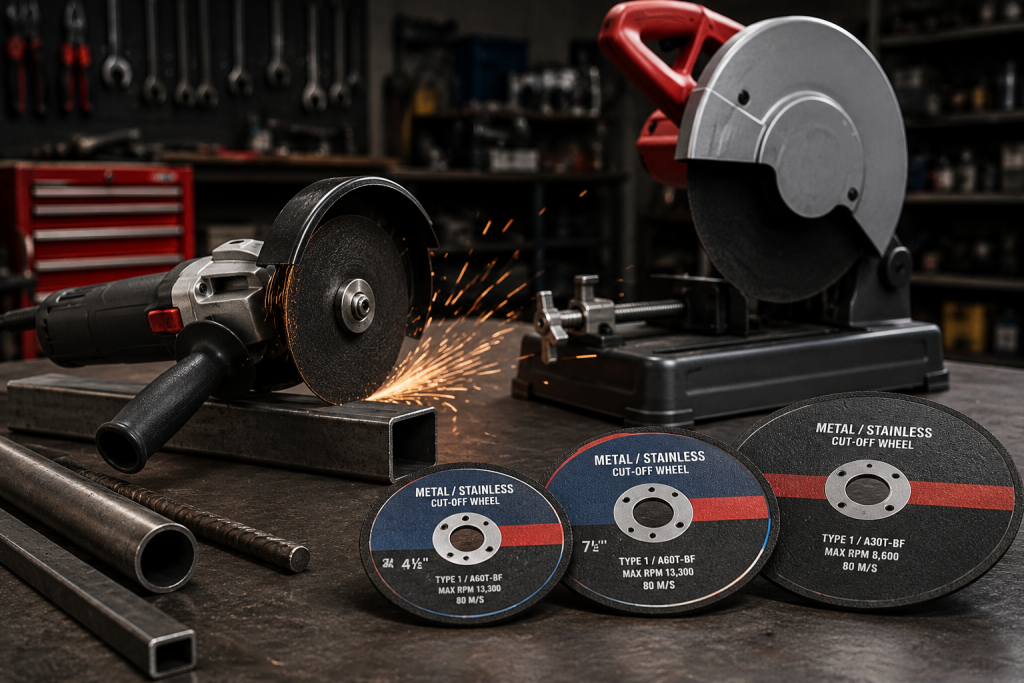
In tool and shop language, a cutoff usually means a tool, wheel, or saw setup made to cut through material. People may write it as cutoff, cut-off, or cut off, but the meaning is usually the same when the topic is tools: it is about making a cut, often through metal, pipe, bolts, sheet material, brackets, or masonry.
For the surrounding panel-repair workflow, see our auto body tools guide. If the cut-off tool is pneumatic, check the model’s demand using the principles in our air-tool CFM guide.
The term can be confusing because cutoff has other meanings outside the shop. For this guide, we are focusing on the tool meaning: cut-off tools, cut-off wheels, angle grinders with cutting discs, and cut-off saws. Once you know the difference, it is much easier to choose the right setup and use it safely.
What Does Cutoff Mean in Tools?
A cutoff is a cutting action or cutting setup. In a garage, fabrication shop, body shop, or jobsite, the word often points to one of three things:
- A cut-off tool, which is a compact handheld tool designed mainly for cutting.
- A cut-off wheel, which is a thin abrasive or diamond wheel used to slice through material.
- A cut-off saw, which is a larger saw used for repeated straight cuts through pipe, bar stock, rebar, angle iron, or similar material.
The key idea is simple: cutoff work is cutting work. It is different from grinding, sanding, polishing, or shaping, even when some of the same tools can accept different wheels or accessories.
What Is a Cut-Off Tool?
A cut-off tool is a compact cutting tool that uses a small rotating wheel to cut metal and other approved materials. Many cut-off tools are pneumatic, which means they run on compressed air, but there are also corded and cordless versions. They are common in automotive work because they can fit into tighter spaces than larger grinders or saws.
A cut-off tool is useful when you need controlled cutting more than all-purpose grinding power. It can help cut bolts, clamps, sheet metal, brackets, exhaust hardware, body panels, and other small to medium shop materials. National Tool Warehouse carries cut-off tools for users who need compact cutting access in garage, auto repair, and shop settings.
Relevant product path: Cut Off Tools at National Tool Warehouse.
What Is a Cut-Off Wheel?
A cut-off wheel is the thin disc that does the cutting. It is usually made with abrasive grain bonded together and reinforced for high-speed use. Some wheels use diamond-coated edges instead of traditional abrasive construction. The right wheel depends on the tool, the material, the wheel size, the arbor, the wheel thickness, and the maximum RPM rating.
Cut-off wheels are made for cutting at a 90-degree angle to the workpiece. They are not the same as grinding wheels. A grinding wheel is thicker and built for side pressure. A cut-off wheel is thinner and designed to cut on its edge. Using a cut-off wheel for grinding can load the wheel sideways and create a serious breakage risk.
Common Cut-Off Wheel Types
- Type 1 or Type 41 wheels are flat cutting wheels. They are often used for straight 90-degree cuts and can provide good cut depth.
- Type 27 or Type 42 wheels have a depressed center. The raised hub can improve clearance and visibility in some grinder applications, but the shape may reduce cut depth in certain situations.
- Abrasive cut-off wheels usually cut quickly and are cost-effective for many metal-cutting jobs.
- Diamond cut-off wheels can last longer in some applications and may create less dust, but they usually cost more and may cut differently depending on the material.
Relevant product path: Cutoff Wheels at National Tool Warehouse.
Cut-Off Tool vs Angle Grinder vs Cut-Off Saw
A cut-off tool, angle grinder, and cut-off saw can all make cuts, but they are not interchangeable for every job. Use the table below as a quick choosing guide.
| Setup | Best For | Main Advantage | Watch Out For |
| Cut-off tool | Small metal cuts, tight spaces, automotive work, clamps, bolts, brackets | Compact control and access | Less useful for thick material or broad grinding tasks |
| Angle grinder with cut-off wheel | General metal cutting, larger workpieces, occasional grinding with the correct wheel | Versatility across cutting, grinding, wire brushing, and surface prep | Needs the right wheel, guard, handle, and technique |
| Die grinder with cut-off wheel | Small cuts, detail work, hard-to-reach areas | Good access with small wheels | Wheel size, RPM, and guarding must match the tool |
| Cut-off saw | Repeated straight cuts in pipe, rebar, angle iron, and bar stock | Stable, repeatable cutting | Less portable and less useful for awkward installed parts |
Related product path: Angle Grinders at National Tool Warehouse.
Cut-Off Wheel vs Grinding Wheel
The easiest way to remember the difference is this: a cut-off wheel cuts on its edge, while a grinding wheel is built for grinding pressure. Cut-off wheels are usually thin because a thin wheel removes less material during the cut. That can mean faster cutting, less waste, and cleaner edges when the wheel is matched to the job.
Grinding wheels are thicker because they need to handle side pressure during grinding, shaping, and surface work. If you need to remove material from a surface, smooth a weld, or grind an edge, choose a grinding wheel or another accessory made for that task. If you need to slice through a bolt, pipe, clamp, sheet, or rod, choose a cut-off wheel rated for that material and tool.
How to Choose the Right Cutoff Setup
Start with the job, then choose the tool and wheel. A wheel that looks close enough is not always safe or effective. Check these points before cutting:
- Material: choose a wheel rated for the material, such as steel, stainless steel, masonry, concrete, or non-ferrous metal.
- Tool size: match the wheel diameter and arbor to the tool.
- RPM rating: the wheel maximum RPM must meet or exceed the tool speed.
- Wheel type: choose Type 1/Type 41 or Type 27/Type 42 based on the tool, guard, and cut access.
- Wheel thickness: thin wheels can cut quickly and remove less material, while thicker wheels can add durability for heavier work.
- Access: use a compact cut-off tool or die grinder when space is tight, and use a larger grinder or saw when the workpiece and cut allow it.
- Workholding: clamp or secure the workpiece so it cannot twist, roll, or pinch the wheel.
Cutoff Tool and Wheel Safety Checklist
Cutoff work can throw sparks, debris, and wheel fragments if something goes wrong. Always follow the tool and wheel manufacturer instructions. For a quick pre-cut check, use this list:
- Wear safety glasses and a face shield when the job calls for face protection.
- Use gloves, hearing protection, and other PPE suited to the material and work area.
- Inspect the wheel for cracks, chips, warping, or other damage before mounting it.
- Confirm the wheel size, arbor, material rating, and max RPM.
- Use the correct guard and keep it positioned between you and the wheel when possible.
- Use the correct flanges and mounting hardware for the wheel.
- Clamp the workpiece so it cannot move during the cut.
- Cut at a 90-degree angle unless the wheel and tool instructions say otherwise.
- Do not bend, twist, or side-load a cut-off wheel.
- Do not grind with a cut-off wheel.
- Keep clothing, cords, hoses, and bystanders out of the wheel path and spark stream.
- Stop if you feel vibration, hear an unusual sound, or notice the wheel binding.
For professional environments, follow applicable workplace safety rules and the safety information provided with the wheel and machine.
Common Uses for Cut-Off Tools and Wheels
Cutoff tools and wheels show up in many garage, automotive, fabrication, maintenance, and jobsite tasks. Common examples include cutting rusted bolts, trimming brackets, cutting exhaust clamps, slicing through sheet metal, cutting small pipe or rod, trimming angle iron, and making access cuts during repair work.
The right setup depends on the cut. A mechanic working around a muffler clamp may want a compact cut-off tool. A fabricator making longer cuts through metal stock may reach for an angle grinder or cut-off saw. A user cutting masonry needs a wheel or blade rated for masonry, not a general metal wheel.
Shop Cut-Off Tools, Wheels, Grinders, and Safety Gear
If you are building a cutting setup, think beyond the tool alone. A practical setup usually includes the tool, the correct wheel, backup wheels, a guard that matches the application, secure workholding, and PPE.
At National Tool Warehouse, shoppers can compare cut-off tools, angle grinders, cut-off wheels, and related shop gear for automotive, maintenance, and repair work.
FAQs
What is the difference between cutoff, cut-off, and cut off?
Cutoff and cut-off are often used as nouns or adjectives, as in cutoff wheel or cut-off tool. Cut off is usually a verb phrase, as in cut off a bolt. In tool searches, people use all three forms, so a helpful article should recognize each spelling.
What is a cut-off tool used for?
A cut-off tool is used for cutting small to medium material, especially metal parts such as bolts, clamps, brackets, exhaust hardware, and sheet metal. It is useful when a compact tool is easier to control than a larger grinder or saw.
Is a cut-off wheel the same as a grinding wheel?
No. A cut-off wheel is thin and designed to cut on its edge. A grinding wheel is thicker and designed for grinding pressure. Do not use a cut-off wheel for grinding unless the wheel is specifically rated as a combination cutting and grinding wheel.
Can you use a cut-off wheel on an angle grinder?
Yes, if the wheel size, arbor, RPM rating, guard, and material rating match the grinder and the job. Always follow the grinder and wheel manufacturer instructions.
What cut-off wheel should I use for metal?
Choose a wheel rated for the exact metal and tool. For steel and ferrous metal, many general cut-off wheels use aluminum oxide abrasive. Stainless steel often requires a wheel marked for stainless or INOX to reduce contamination risk. Always check the wheel label.
Are diamond cut-off wheels better than abrasive wheels?
Not always. Abrasive wheels are often fast and cost-effective. Diamond wheels may last longer in some applications and can create less wheel dust, but they cost more and are not automatically the best choice for every cut.
What safety gear do I need for cutoff work?
At minimum, use eye protection and follow the PPE recommendations from the tool and wheel manufacturer. Many cutoff jobs also call for a face shield, gloves, hearing protection, protective clothing, and careful control of sparks and debris.
Shop Our Selection
If you’re ready to find the right tool for your next project, browse our cut-off tools to see our full inventory of options.