
What Is an Air Impact Wrench?
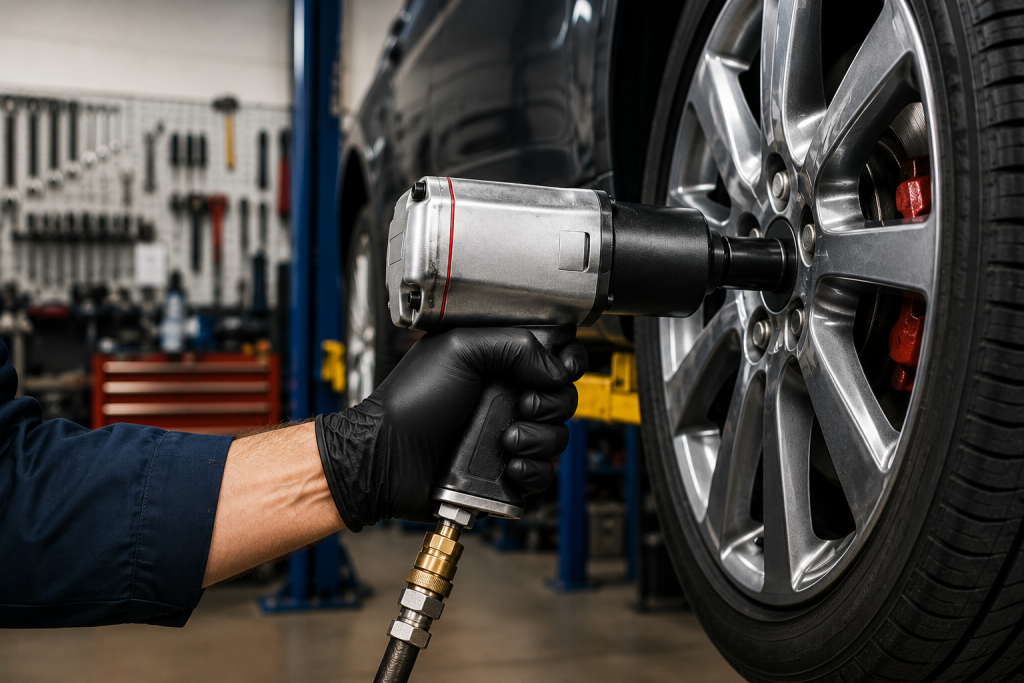
An air impact wrench is a pneumatic power tool that uses compressed air to loosen or tighten nuts and bolts with fast, repeated bursts of torque. If you have ever watched a tire shop remove lug nuts in seconds, you have seen the basic idea in action. The tool sends compressed air through an internal motor, which drives a hammer mechanism that strikes an anvil connected to the tool drive. That impact action is what gives the wrench its power.
Before matching a wrench to a compressor, compare impact-wrench CFM requirements. Our socket drive guide helps you distinguish drive size from the socket opening that fits the fastener.
Air impact wrenches are common in automotive repair shops, tire bays, fleet maintenance facilities, industrial assembly areas, and home garages with a strong enough air compressor. They are especially useful when fasteners are tight, rusty, repetitive, or too stubborn for a standard ratchet.
The short answer: an air impact wrench is built for high-torque fastening work. It is not a precision final-tightening tool by itself. For lug nuts and other torque-critical fasteners, use the impact wrench to run the fastener on or off, then finish tightening with a calibrated torque wrench according to the manufacturer specification.
How Does an Air Impact Wrench Work?
An air impact wrench runs on compressed air supplied by an air compressor. When you press the trigger, air flows through the tool and spins an internal motor. That motor winds up a hammer mechanism, which then strikes an anvil. The anvil is connected to the square drive where the impact socket attaches.
Instead of applying one smooth turning force like a hand wrench, the tool applies many short torque impacts. Those impacts help break fasteners loose while reducing the constant twisting force felt by the user. This is why an air impact wrench can remove stubborn bolts that would be slow or difficult with a regular ratchet.
The main parts to understand are simple:
- Air inlet: where the hose connects to the tool.
- Motor: converts compressed air into rotation.
- Hammer mechanism: stores and releases energy in repeated blows.
- Anvil: transfers those impacts to the socket.
- Drive: the square end that holds the impact socket, commonly 3/8 inch, 1/2 inch, 3/4 inch, or 1 inch.
What Is an Air Impact Wrench Used For?
Air impact wrenches are used anywhere fasteners need more speed or torque than a hand tool can comfortably provide. The most familiar use is removing and installing automotive lug nuts, but that is only one part of the picture.
Common uses include:
- Automotive repair: lug nuts, suspension bolts, brake work, engine brackets, and other stubborn shop fasteners.
- Tire service: repeated wheel removal and installation in high-volume environments.
- Fleet maintenance: trucks, trailers, buses, agricultural equipment, and service vehicles.
- Construction and fabrication: structural bolts, equipment repair, and assembly work.
- Industrial maintenance: machinery repair, production equipment service, and repetitive fastening tasks.
- Home garage work: serious DIY automotive jobs when the compressor and sockets are suitable for the task.
Air Impact Wrench vs Cordless Impact Wrench
Air and cordless impact wrenches can both remove tough fasteners, but they fit different work environments. Air tools are often favored in shops because they can deliver consistent power as long as the compressor keeps up. Cordless impact wrenches are easier to move around because they do not need an air hose or compressor.
| Factor | Air impact wrench | Cordless impact wrench |
| Power consistency | Strong and consistent when the compressor and air line are sized correctly. | Depends on battery charge, tool class, and motor design. |
| Portability | Limited by hose and compressor location. | Easy to move around a shop, garage, yard, or roadside job. |
| Runtime | Can run as long as the compressor keeps up. | Limited by battery capacity and spare batteries. |
| Weight | Often lighter at the tool because there is no battery. | Often heavier because the battery is attached. |
| Setup cost | Requires compressor, hose, fittings, and maintenance accessories. | Requires batteries and charger, but no air system. |
| Best fit | High-use shops, tire service, fleet maintenance, and garages with existing air. | Mobile work, occasional use, and jobs away from compressed air. |
Key Specs to Know Before You Buy
The right air impact wrench depends on the work you do most often. A compact tool that feels great under a vehicle may not have enough power for heavy equipment. A large tool that handles truck work may be too bulky for lighter automotive jobs.
Pay attention to these specs before buying:
- Drive size: 3/8 inch is useful for lighter work and tighter spaces. 1/2 inch is the common choice for general automotive repair. 3/4 inch and 1 inch drives are usually for fleet, truck, agricultural, and heavy equipment work.
- Working torque: the torque range the tool is designed to apply during regular fastening work.
- Breakaway torque: the tool’s maximum short-burst loosening capability. This number is useful, but it should not be the only buying factor.
- Air consumption: usually measured in CFM. Your compressor must supply enough air for the tool under real working conditions.
- Air pressure: many pneumatic impact wrenches are rated around 90 PSI, but always check the tool manual.
- Weight and size: lighter tools reduce fatigue, while compact heads help in crowded work areas.
- Retainer type: ring retainers are common for quick socket changes, while pin or thru-hole retainers are often used where socket retention is more critical.
- Controls: look for forward/reverse control and useful power settings if you need more control during installation.
What Size Air Impact Wrench Do You Need?
For most automotive users, a 1/2 inch air impact wrench is the practical starting point. It handles many wheel, suspension, and general repair jobs without jumping straight into the size and air demand of heavy-duty tools.
Use the job as the guide:
- Choose 3/8 inch for smaller fasteners, lighter automotive work, and tighter access areas.
- Choose 1/2 inch for general automotive repair, tire service, and common garage jobs.
- Choose 3/4 inch for larger fasteners, truck work, and heavier shop tasks.
- Choose 1 inch for heavy equipment, commercial truck service, agricultural equipment, and industrial applications.
Compressor and Air Line Setup Matters
An air impact wrench is only as good as the air system feeding it. Many tool problems that feel like weak performance are really compressor, hose, fitting, or air-flow problems.
PSI matters, but CFM matters just as much. PSI is air pressure. CFM is air volume. A compressor may reach the right pressure but still fail to deliver enough air volume for repeated impact work. If the wrench slows down quickly, struggles after a few bursts, or feels inconsistent, check the compressor output, hose size, couplers, regulator, and moisture in the line.
A better setup usually includes:
- A compressor that meets or exceeds the tool’s CFM requirement at the rated PSI.
- A properly sized air hose to reduce pressure drop.
- High-flow couplers and fittings where needed.
- A regulator set to the tool manufacturer’s recommended pressure.
- A filter or moisture separator to protect the tool.
- Regular air tool oil if the tool design requires it.
Safety Tips for Using an Air Impact Wrench
An air impact wrench can make tough work faster, but it should be treated with respect. High torque, compressed air, and hardened sockets all carry risk when used carelessly.
Follow these basic safety practices:
- Use impact-rated sockets only. Chrome hand sockets can crack or shatter under impact use.
- Wear eye protection. Rust, debris, and socket fragments can become hazards.
- Use hearing protection in shop environments. Air tools can be loud, especially during repeated use.
- Keep the socket square on the fastener to reduce rounding and tool kickback.
- Use short, controlled bursts rather than holding the trigger continuously.
- Do not use an impact wrench as your final torque check. Finish torque-critical fasteners with a torque wrench.
- Disconnect air before changing sockets, servicing the tool, or clearing jams.
Maintenance Tips That Help Air Tools Last
Pneumatic tools are durable, but they still need basic care. A neglected air impact wrench can lose power, run rough, or wear out faster than expected.
A simple maintenance routine includes:
- Lubricate the tool according to the manufacturer’s instructions.
- Drain compressor moisture regularly so water does not travel through the air line.
- Inspect hoses and fittings for leaks.
- Keep the air inlet clean.
- Store the tool in a dry place.
- Check impact sockets for cracks, wear, or damaged drive ends.
When Is an Air Impact Wrench Better Than Electric?
An air impact wrench is often the better choice for shop work where compressed air is already available and the tool will be used repeatedly throughout the day. Air tools can be lighter than many cordless tools because they do not carry a battery, and they can keep working as long as the compressor and air system can support them.
Cordless impact wrenches are often better for mobile work, roadside service, jobs far from an air line, or users who do not want to maintain a compressor. For many home users, cordless convenience may matter more than maximum shop efficiency.
If you already own a capable compressor and do frequent mechanical work, an air impact wrench can be a smart addition. If you work in different locations or only need occasional fastening power, compare cordless models before deciding.
How National Tools Warehouse Can Help
National Tools Warehouse carries a broad selection of air tools and shop equipment for automotive and professional service work. If you are setting up for pneumatic fastening, look beyond the wrench itself. The best setup may include the right air compressor, impact sockets, air hose, fittings, regulator, filter, and air tool oil.
Before buying, match the wrench to the fasteners you work on most, then make sure your compressor and air line can supply the tool properly. That combination matters more than chasing the biggest torque number on the box.
FAQs About Air Impact Wrenches
What is the difference between an air impact wrench and an impact driver?
An air impact wrench is usually built for sockets and higher-torque fastening work on nuts and bolts. An impact driver is usually built for driving screws and smaller fasteners with hex-shank bits. There is overlap in some tasks, but they are not the same tool.
Can you use regular sockets on an air impact wrench?
No. Use impact-rated sockets. Regular chrome hand sockets are not designed for repeated impact blows and can crack or shatter.
What PSI does an air impact wrench need?
Many air impact wrenches are rated around 90 PSI, but you should check the specific tool manual. Do not rely on PSI alone. The compressor also needs enough CFM to keep the tool working properly.
What size compressor do I need for an air impact wrench?
It depends on the wrench and how often you use it. Check the tool’s CFM requirement at the rated PSI, then choose a compressor that can meet or exceed that demand. Frequent use usually requires more tank capacity and stronger air delivery than occasional short bursts.
Is an air impact wrench better than cordless?
Air is often better for repeated shop use when a strong compressor is already available. Cordless is often better for portability and convenience. The better choice depends on where you work, how often you use the tool, and whether you already have an air system.
Can an air impact wrench over-tighten lug nuts?
Yes. An impact wrench can over-tighten lug nuts if used carelessly. Use it for removal and initial installation, then tighten lug nuts to the vehicle manufacturer’s specification with a torque wrench.