
Which Power Tool Brand Is Best?
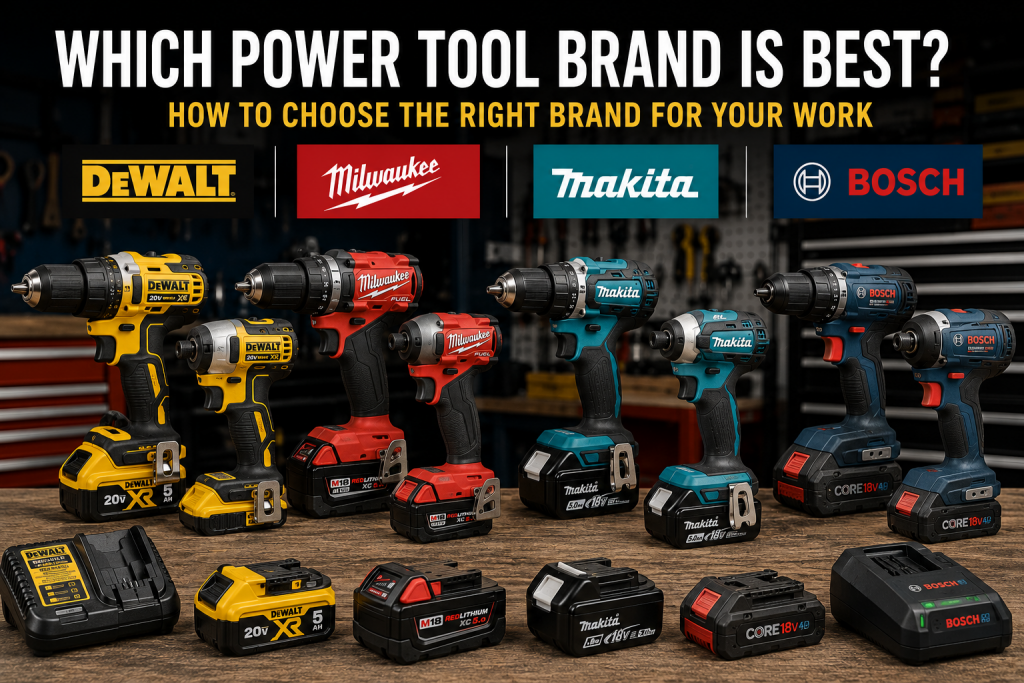
The best power tool brand depends on the work you do most often. A homeowner may need an affordable cordless drill and driver set for weekend projects, while a professional mechanic may need a durable cordless platform with impact wrenches, ratchets, grinders, batteries, chargers, and specialty tools for daily shop use.
If a drill is your first purchase in a battery platform, compare the selection factors in our cordless drill guide. For cutting jobs, identify the appropriate cut-off tool and wheel before comparing brands.
Choosing a brand is not only about the first tool you buy. It is also about the battery platform, tool lineup, replacement battery cost, serviceability, warranty support, and whether the brand has the tools you may need later. A cordless drill may be the first purchase, but many users eventually add impact drivers, impact wrenches, saws, grinders, work lights, chargers, and storage solutions.
So, which power tool brand is best? The honest answer is that there is no single best brand for everyone. The best power tool brand is the one that fits your work, your budget, your battery platform, and your long-term tool needs.
Which Power Tool Brand Is Best?
There is no single power tool brand that is best for every user. A DIY user, mechanic, contractor, woodworker, and professional technician may all need different things from their tools.
For basic DIY users, the best power tool brand is usually one that offers affordable starter kits, easy-to-use tools, dependable batteries, and enough power for home projects.
For mechanics, the best brand is often the one with strong cordless ratchets, impact wrenches, compact drills, work lights, grinders, and automotive-focused tools that can handle garage and service bay work.
For contractors, the best brand is usually one with durable jobsite tools, high-capacity batteries, saws, drills, impact drivers, grinders, and fast chargers.
For woodworkers, the best power tool brand may be the one that offers accurate saws, sanders, routers, dust collection options, and smooth tool control.
For heavy-duty work, professional brands with high-output batteries, brushless motors, strong tool housings, and reliable service support may be the better choice.
The key is to avoid choosing a brand based only on popularity. A brand that works well for a contractor may not be the best fit for a home garage. A brand that is ideal for light DIY projects may not hold up to professional shop use. The right choice starts with the work you actually do.
Why the Best Power Tool Brand Depends on the Job
Different users value different things. That is why power tool brand comparisons can be difficult. One person may care most about price, while another cares about torque, battery life, or specialty tool availability.
A DIY user may care about:
- Price
- Ease of use
- Basic drill and driver kits
- Battery compatibility
- Lightweight tools
- Simple storage
For home use, a compact drill, impact driver, work light, and basic saw may be enough. A DIY user may not need the most expensive professional platform if the tools are only used occasionally.
A mechanic may care about:
- Cordless impact wrenches
- Cordless ratchets
- Compact tools for tight spaces
- Work lights
- Battery life
- Durability around oil, dust, and shop conditions
- Tool balance and grip
Automotive work often requires tools that fit into tight spaces around engine bays, under dashboards, inside wheel wells, and beneath vehicles. Compact size and torque can matter just as much as raw power.
A contractor may care about:
- Jobsite durability
- High-power saws and drills
- Fast charging
- Multiple battery sizes
- Tool storage
- Availability of replacement batteries
- Weather and dust resistance
A professional shop may care about:
- Long-term platform support
- Tool variety
- Warranty
- Serviceability
- Consistent performance across multiple users
- Availability of accessories and replacement parts
The best power tool brand is the one that matches those needs without forcing you to overbuy or compromise on the tools you use most.
Power Tool Brand Comparison: What to Look For
Before choosing a power tool brand, compare the features that affect long-term ownership. The first tool matters, but the full platform matters more.
Battery Platform
Battery platform is one of the biggest factors when choosing a power tool brand. Once you buy a drill, impact driver, saw, grinder, or ratchet from one brand, you will often keep buying tools that use the same batteries.
Compare:
- Battery voltage
- Battery capacity
- Fast charger availability
- Compact batteries vs high-output batteries
- Compatibility across tools
- Cost of replacement batteries
- Availability of battery kits
The best cordless power tool brand is often the one with the battery platform you want to build around long term.
If you own one drill and one battery, this may not seem important. But once you own multiple tools, battery compatibility becomes a major advantage. You can rotate batteries between tools instead of keeping several chargers and battery types on your bench.
Tool Selection
A strong power tool brand should offer more than one or two tools. Before choosing a platform, check whether the brand has the tools you may need later.
Look for a lineup that includes:
- Drills
- Impact drivers
- Impact wrenches
- Cordless ratchets
- Grinders
- Saws
- Sanders
- Work lights
- Batteries
- Chargers
- Specialty tools
For automotive users, the availability of impact wrenches, compact ratchets, lights, grinders, and battery tools may be more important than woodworking tools. For contractors, saws, hammer drills, impact drivers, and jobsite lighting may matter more.
Power and Performance
Performance matters, but the most powerful tool is not always the best choice. A compact tool may be better for tight spaces, while a high-torque tool may be better for heavy fastening or cutting.
Compare:
- Torque
- RPM
- Brushless motor options
- Runtime
- Heat control
- Tool balance
- Application-specific power
For example, a high-torque impact wrench may be ideal for lug nuts and suspension work, but a compact impact may be easier to use in tight areas. The same applies to drills and grinders. Power is useful, but control and fit matter too.
Durability
Durability matters more for frequent users and professionals. Tools used every day in a shop or on a jobsite need to handle vibration, drops, dust, heat, and repeated use.
Look at:
- Housing quality
- Motor design
- Chuck or anvil quality
- Trigger feel
- Battery connection strength
- Grip quality
- Warranty support
A professional user may pay more upfront for a tool that lasts longer, performs consistently, and has better service support. A DIY user may not need that same level of durability for occasional projects.
Price and Value
The cheapest power tool brand is not always the best value, and the most expensive brand is not always necessary.
Think about value in terms of:
- Entry-level cost
- Mid-range performance
- Professional durability
- Battery and charger cost
- Kit pricing vs bare tool pricing
- How often the tool will be used
Starter kits can be a good value because they often include the tool, battery, charger, and case. Bare tools can be a better value once you already own compatible batteries and chargers.
Warranty and Service Support
Warranty and service support matter, especially for professional users.
Compare:
- Warranty length
- Ease of service
- Replacement battery availability
- Charger availability
- Brand reputation
- Long-term platform support
A good warranty does not replace choosing the right tool, but it can make ownership easier if something goes wrong.
Best Power Tool Brand by User Type
The best brand depends on the type of user. Instead of asking which brand is best overall, it is more useful to ask which brand is best for your kind of work.
Best Power Tool Brand for DIY Users
DIY users usually need dependable tools that are affordable, easy to use, and available in starter kits. The best power tool brand for DIY work should offer enough power for common home projects without forcing users into a professional-level price range.
Important features include:
- Affordable drill and driver kits
- Lightweight tools
- Simple battery platform
- Good value batteries
- Enough power for home projects
- Easy storage
Common DIY-friendly brands may include Bosch, and entry-level DeWalt kits, depending on availability and the user’s needs.
For most DIY users, the best choice is a brand that makes it easy to start with a drill and driver kit, then add tools over time.
Best Power Tool Brand for Mechanics
Mechanics need compact, durable, high-torque cordless tools that work well in garages, service bays, engine compartments, under vehicles, and tight spaces.
Important features include:
- Cordless impact wrenches
- Cordless ratchets
- Compact drills
- Work lights
- Strong batteries
- Good grip and balance
- Brushless motor options
- Tool variety for automotive work
Brands often compared for mechanic work include Milwaukee, DeWalt, Makita, Bosch, and professional shop brands where available.
For automotive users, the best power tool brand is often the one with the strongest lineup of compact, high-torque tools that fit the way you work in a garage or service bay.
Best Power Tool Brand for Contractors
Contractors need reliable tools that can handle jobsite use, frequent transport, and demanding applications.
Important features include:
- Hammer drills
- Impact drivers
- Circular saws
- Reciprocating saws
- Grinders
- Jobsite lights
- High-capacity batteries
- Fast chargers
- Durable storage options
Common contractor-focused brands include DeWalt, Milwaukee, Makita, Bosch. The best option depends on the tools needed most often and the battery system the user wants to build around.
Best Power Tool Brand for Woodworking
Woodworkers may care more about accuracy, dust control, sanding quality, cutting precision, and ergonomics than raw torque.
Important features include:
- Sanders
- Routers
- Track saws
- Circular saws
- Jigsaws
- Dust extraction compatibility
- Fine control
- Smooth operation
Brands often compared for woodworking include Makita, Bosch, DeWalt, and Milwaukee. The best choice depends on whether the user is focused on rough cutting, finish work, cabinetry, trim, or general shop projects.
Best Power Tool Brand for Professional Shops
Professional shops should choose a brand based on durability, availability, battery ecosystem, and the specific tools technicians use every day.
Important features include:
- Tool lineup depth
- Battery availability
- Warranty support
- Replacement parts
- High-output tools
- Specialty tools
- Storage compatibility
A professional shop should choose a platform that supports the full range of work being done, not just the first tool purchased.
Corded vs Cordless Power Tool Brands
Cordless tools are convenient, but corded tools still make sense for certain jobs. Most users benefit from a mix of cordless and corded tools depending on the application.
Cordless Power Tools
Cordless power tools are best for:
- Mobility
- Automotive work
- Jobsites
- Quick repairs
- Tight spaces
- Shops where users move around often
The main benefit is convenience. There is no cord to manage, and the tool can be used in multiple locations. Cordless tools work especially well when the user already owns batteries and chargers from the same platform.
Corded Power Tools
Corded power tools are best for:
- Continuous work
- Stationary workspaces
- High-demand applications
- Users who do not want to manage batteries
- Some grinders, saws, sanders, and specialty tools
Corded tools can still be useful when consistent power is needed for long periods. They can also be a practical choice for a bench, shop, or workspace where outlets are always available.
Why Battery Platform Matters More Than One Tool
When comparing power tool brands, you are not just choosing a drill or impact driver. You are often choosing a full tool system.
That matters because batteries can be expensive. Chargers take up space. Replacement batteries may not work across brands. If you mix too many platforms, you may end up with several chargers, several battery types, and less flexibility.
A larger battery platform gives you more options later. Once you already own batteries and chargers, buying bare tools from the same platform is usually easier and more cost-effective.
For example, if you buy a cordless drill, impact driver, work light, grinder, and ratchet from the same platform, you can rotate batteries across the tools instead of managing multiple chargers and battery types.
This is why many buyers choose a brand based on the full cordless ecosystem rather than one single tool.
Popular Power Tool Brands to Compare
Availability may vary, but these are common brands users often compare when choosing a power tool platform.
DeWalt
DeWalt has a strong general-purpose and professional presence. It is popular with contractors, DIY users, shop users, and buyers who want a broad cordless lineup. DeWalt can be a good option for users who want a widely available platform with a large selection of drills, drivers, saws, grinders, and accessories.
Milwaukee
Milwaukee is known for a strong professional cordless platform and is popular in automotive, electrical, plumbing, and trade environments. It is often compared for compact tools, cordless ratchets, impacts, and specialty trade tools. For mechanics and technicians, Milwaukee is often a strong platform to consider.
Makita
Makita has a strong reputation for professional tools and is popular for drilling, cutting, grinding, woodworking, and jobsite applications. It can be a good option for users who want a broad cordless and corded lineup with tools for both construction and shop work.
Bosch
Bosch is often associated with drills, drivers, measurement tools, woodworking, and professional tools. It can be a good option for users who value precision, ergonomics, and tool control.
Best Power Tool Brand for Automotive Work
Automotive work often requires different tools than general construction. A mechanic may need tools that are compact enough for tight spaces but powerful enough for stubborn fasteners.
Important automotive cordless tools include:
- Impact wrenches
- Cordless ratchets
- Compact drills
- Right-angle tools
- Work lights
- Grinders
- Cut-off tools
- Battery tools
- Chargers
- Specialty tools
Automotive buyers should consider:
- Tool size
- Access in tight spaces
- Torque
- Battery life
- Durability around fluids and shop conditions
- Battery compatibility with other garage tools
For automotive users, the best power tool brand is often the one with the strongest lineup of compact, high-torque tools that fit the way you work in a garage or service bay.
Best Power Tool Brand for Home Use
Home users usually do not need the same tool platform as full-time professionals. For home use, the best brand is usually the one that gives you reliable performance, simple battery compatibility, and enough tools for common projects without overbuying.
Look for:
- Easy-to-use kits
- Drill and impact driver combo sets
- Light-duty saws
- Work lights
- Affordable batteries
- Storage
- Basic accessories
A homeowner may be better served by a practical starter kit than a high-end professional platform. The goal is to get tools that are useful, easy to manage, and appropriate for the projects being done.
Best Power Tool Brand for Professional Use
Professionals should think long term. A professional should choose a brand that can support the full range of work they do, not just the first tool they buy.
Professional users should consider:
- Daily durability
- Battery ecosystem depth
- Tool warranty
- Specialty tool availability
- Replacement battery cost
- Fast charging
- High-output battery options
- Tool storage
- Local or online availability
If a tool is used every day, the cost of downtime matters. A stronger battery platform, better durability, and wider tool selection can be worth the investment for professional users.
Common Mistakes When Choosing a Power Tool Brand
Choosing a power tool brand can be expensive, so it is worth avoiding common mistakes.
Do not buy only based on price. A low-cost tool may be fine for occasional use, but it may not be the best choice for frequent shop or jobsite work.
Do not choose based on one tool instead of the full platform. A great drill does not help much if the brand does not offer the saws, grinders, impact wrenches, or specialty tools you need later.
Do not ignore battery compatibility. Batteries and chargers are a major part of cordless tool ownership.
Do not buy more power than you need. Heavy tools can be tiring and harder to control for simple tasks.
Do not buy too little power for professional work. Underpowered tools can slow you down and wear out faster under heavy use.
Do not mix too many battery platforms. Too many chargers and battery types can create clutter and increase cost.
Do not forget to check warranty or service support. This matters more if you depend on the tools daily.
Do not ignore size and ergonomics. A tool that feels awkward may be frustrating even if it has good specs.
Do not choose a brand without the specialty tools you may need later.
Do not buy bare tools unless you already own compatible batteries and chargers.
How to Choose the Best Power Tool Brand for You
The best power tool brand is the one that gives you the right combination of performance, battery compatibility, tool selection, durability, and value for your specific work.
Before choosing a brand, ask:
- What work do I do most often?
- Am I a DIY user, mechanic, contractor, or professional technician?
- Do I already own batteries from one brand?
- What tools will I need in the next 1–3 years?
- Do I need compact tools or high-torque tools?
- Is tool weight important?
- Are replacement batteries easy to find?
- Does the brand offer kits, bare tools, and accessories?
- What is my budget?
- Do I need warranty or service support?
If you are only doing light home projects, choose a brand that is affordable, easy to use, and has basic kits. If you work in a garage or professional shop, choose a brand with compact high-torque tools, strong battery support, and durable construction. If you are a contractor, choose a platform with jobsite-ready tools and batteries that can keep up with daily use.
FAQs
Which power tool brand is best overall?
There is no single best power tool brand for everyone. The best brand depends on the type of work you do, your budget, your battery platform, and the tools you need most often.
What is the best power tool brand for mechanics?
Mechanics often benefit from brands with compact cordless tools, strong impact wrenches, cordless ratchets, work lights, and durable batteries. The best option depends on the technician’s preferred platform and daily workflow.
What is the best power tool brand for home use?
For home use, the best power tool brand is usually one that offers affordable kits, easy-to-use tools, good battery compatibility, and enough options for common DIY projects.
Should I stick with one power tool brand?
In most cases, yes. Sticking with one cordless platform makes it easier to share batteries and chargers across tools, which can save money and reduce clutter.
Is Milwaukee better than DeWalt?
Milwaukee and DeWalt both offer strong power tool platforms. The better choice depends on the tools you need, the battery system you prefer, your budget, and whether you are buying for DIY, automotive, construction, or professional use.
Is Makita better than DeWalt?
Makita and DeWalt both offer professional-grade tools across many categories. Makita may appeal to users who value precision, cutting, grinding, and woodworking tools, while DeWalt is often popular for broad jobsite and general-purpose use.
Are expensive power tool brands worth it?
Expensive power tool brands can be worth it for professionals and frequent users who need durability, performance, and long-term battery support. Occasional DIY users may not need the most expensive platform.
What should I compare before choosing a power tool brand?
Compare battery platform, tool lineup, torque, runtime, durability, price, warranty, replacement batteries, chargers, and the types of tools you may need in the future.
Build the Right Power Tool Platform
The best power tool brand is not always the most expensive, most powerful, or most popular option. It is the brand that fits your work, battery needs, budget, and long-term tool plans.
For DIY users, that may mean an affordable starter platform. For mechanics, it may mean compact cordless ratchets and impact wrenches. For contractors, it may mean jobsite-ready saws, drills, drivers, and batteries. For professional shops, it may mean a durable platform that supports multiple users and daily work.
Browse electric and cordless tools at National Tool Warehouse, including drills, impact drivers, impact wrenches, batteries, chargers, accessories, and power tools for DIY garages, automotive shops, and professional workspaces.