
Electrical Tools for Automotive and Shop Electrical Work
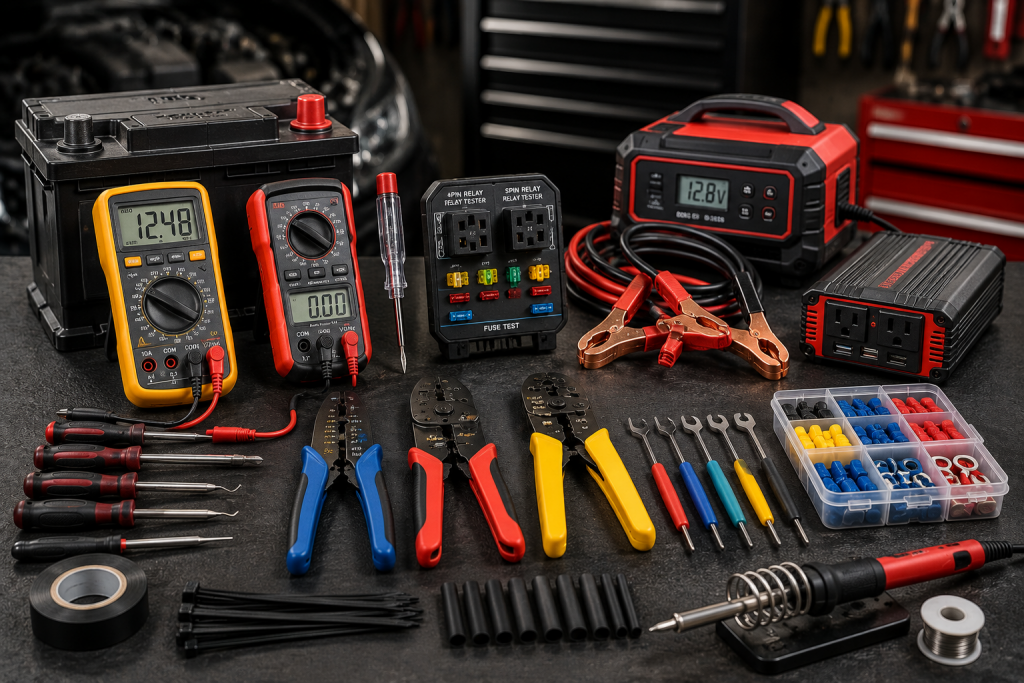
Electrical tools are used to test, repair, connect, protect, and troubleshoot electrical systems. In automotive work, they are essential for diagnosing battery problems, checking circuits, repairing wiring, replacing terminals, testing fuses, and finding electrical faults.
For a practical electrical check, follow our car battery tester guide. Our explanation of vehicle diagnostic testing covers the broader process when a fault needs further investigation.
Modern vehicles rely heavily on electrical systems. Batteries, sensors, control modules, lights, accessories, charging systems, and wiring harnesses all need to work together properly. When something fails, the right electrical tools can help you narrow down the problem before replacing parts unnecessarily.
Whether you are a DIY user working in a home garage or a professional technician handling daily diagnostics, having the right tools can make electrical repair safer, faster, and more accurate.
What Are Electrical Tools?
Electrical tools include testing tools, wiring tools, battery tools, hand tools, and accessories used to work safely and accurately with electrical systems.
In automotive and shop environments, electrical tools are commonly used for:
- Testing voltage and continuity
- Finding power and ground issues
- Repairing damaged wires
- Crimping terminals and connectors
- Testing batteries and charging systems
- Checking fuses and relays
- Diagnosing sensors and circuits
- Supporting mobile and shop power needs
Some electrical tools are simple, such as electrical tape, wire strippers, and test lights. Others are more advanced, such as multimeters, circuit testers, battery testers, relay testers, and specialty diagnostic tools. The right setup depends on the type of work you do and how often you work on electrical systems.
Essential Electrical Tools for Automotive Work
A well-rounded automotive electrical tool kit should include tools for testing, wiring, battery service, and basic repair work.
Common electrical tools include:
- Multimeter
- Circuit tester
- Test light
- Wire strippers
- Crimping tool
- Wire terminal tool
- Electrical connector tools
- Fuse tester
- Relay tester
- Battery tester
- Battery charger
- Booster cables
- Power inverter
- Heat shrink tubing
- Electrical tape
- Pick set
- Soldering iron
- Wiring repair kit
DIY users may only need the basics at first, such as a multimeter, circuit tester, wire strippers, crimping tool, battery charger, and electrical tape. Professional technicians usually need a wider range of diagnostic and repair tools because electrical faults can be more complex and time-consuming to track down.
Electrical Diagnostic Tools
Electrical diagnostic tools help identify what is happening inside a circuit. They are used to check voltage, continuity, resistance, current, power, ground, fuses, relays, sensors, and related components.
Multimeters
A multimeter is one of the most important electrical diagnostic tools for automotive work. It can be used to test voltage, resistance, continuity, and current.
A multimeter is helpful for checking:
- Battery voltage
- Alternator output
- Fuses
- Sensors
- Grounds
- Wiring
- Switches
- Connectors
- Parasitic draw issues
For example, if a vehicle will not start, a multimeter can help confirm whether the battery has enough voltage. If a light, sensor, or accessory is not working, it can help test whether power and ground are reaching the component.
Because a multimeter gives more detailed measurements than a basic test light, it is a must-have tool for both DIY users and professional technicians.
Circuit Testers
A circuit tester is used to check whether power is present in a circuit. It is often faster than a multimeter for simple power checks.
Circuit testers are useful for checking:
- Fuses
- Switches
- Connectors
- Accessory power
- Lighting circuits
- Basic wiring issues
A circuit tester can quickly tell you whether a circuit is live. This makes it helpful when troubleshooting simple electrical problems, such as a non-working light, power outlet, or accessory circuit.
Test Lights
A test light is another useful tool for basic circuit checks. It helps confirm power and ground in a circuit and is commonly used for quick electrical troubleshooting.
Test lights are simple and effective, but they should be used carefully on modern vehicles. Some sensitive electronic circuits and control modules may require more precise testing with a multimeter or manufacturer-recommended diagnostic method.
For basic fuse, lighting, and accessory checks, a test light can still be a valuable tool in the garage or shop.
Fuse and Relay Testers
Fuses and relays are common causes of electrical problems. A fuse tester or relay tester can help identify faults related to power distribution and switching.
These tools are useful for diagnosing:
- No-start issues
- Lighting problems
- Accessory failures
- Intermittent faults
- Power window issues
- Fan or blower motor problems
- Fuel pump circuit issues
A blown fuse may point to an overloaded or shorted circuit. A bad relay may prevent a component from turning on even when the rest of the circuit is working. Fuse and relay testers help narrow down these problems more efficiently.
Wiring and Wire Repair Tools
Wiring repair tools are used to strip, cut, connect, crimp, solder, protect, and service vehicle wiring. These tools are important because poor wiring repairs can cause intermittent problems, voltage drops, corrosion, or complete circuit failure.
Wire Strippers
Wire strippers are used to remove insulation from a wire without damaging the conductor inside. A clean strip is important for making a reliable repair or connection.
Using the wrong tool can nick or weaken the wire, which may lead to future electrical problems. A good wire stripper helps create clean, consistent results when installing terminals, connectors, or splice repairs.
Crimping Tools
Crimping tools are used to attach terminals, connectors, and butt connectors to wire. A proper crimp creates a secure mechanical and electrical connection.
Crimping tools are commonly used for:
- Butt connectors
- Ring terminals
- Spade terminals
- Quick-disconnect terminals
- Battery-related terminals
- Harness repairs
A poor crimp can cause loose connections, resistance, heat, or intermittent electrical faults. For automotive work, using the correct crimping tool for the connector type is important.
Wire Terminal Tools
Wire terminal tools are used for removing, installing, and servicing terminals inside electrical connectors. These tools are especially helpful when working on vehicle wiring harnesses.
They can help with:
- Depinning connectors
- Replacing damaged terminals
- Servicing sensor connectors
- Repairing harness plugs
- Fixing corroded connections
- Working with tight connector housings
Without the correct terminal tool, it is easy to damage the connector body or terminal lock. For technicians who work on vehicle electrical systems often, terminal tools are a valuable part of the kit.
Electrical Connector Tools
Electrical connector tools help release clips, tabs, and locks without damaging wiring or plastic connector housings. Automotive connectors can become brittle over time, especially in engine bays where heat and vibration are common.
These tools are useful for:
- Sensor connectors
- Module plugs
- Harness connectors
- Engine bay wiring
- Interior electrical connectors
- Lighting connectors
Using the right connector tool can save time and prevent broken clips or damaged wiring.
Soldering Tools
Soldering tools are used for certain wire repair and connection tasks. A soldering iron can help create a strong electrical connection when soldering is the correct repair method.
However, not every automotive wiring repair should automatically be soldered. Some applications may be better suited to proper crimp connectors, sealed terminals, or manufacturer-approved repair methods. The best option depends on the circuit, location, vibration exposure, and service requirements.
When soldering is used, heat shrink tubing or other protective covering should be added to help protect the repair.
Battery and Charging System Tools
Battery and charging system tools are used to test, charge, maintain, and support vehicle batteries. These tools are important because many electrical complaints start with a weak battery, poor connection, or charging system issue.
Battery Testers
Battery testers help check battery condition and voltage. Some testers can also evaluate whether the battery can hold a charge or deliver enough power during starting.
Battery testers are useful for diagnosing:
- Weak batteries
- No-start problems
- Slow cranking
- Intermittent starting issues
- Battery drain concerns
- Charging system complaints
Before replacing starters, alternators, sensors, or electrical components, it is often worth confirming that the battery is healthy and properly connected.
Car Battery Chargers
Car battery chargers are used to recharge batteries and help maintain battery health. They are useful for vehicles in storage, seasonal vehicles, shop environments, and routine maintenance.
A battery charger can help when:
- A battery is low from sitting
- A vehicle is stored for long periods
- A battery needs to be charged before testing
- A shop needs to maintain customer vehicles
- A technician needs stable battery voltage during certain service work
Battery chargers come in different sizes and charging capabilities, so users should choose one that fits the battery type and application.
Booster Cables and Jump Starters
Booster cables and jump starters are used to start vehicles with weak or dead batteries.
Booster cables are common in garages, service vehicles, and emergency kits. Portable jump starters or power packs are also useful because they can help start a vehicle without needing another vehicle nearby.
These tools are helpful for:
- Roadside situations
- Home garage use
- Shop battery support
- Fleet maintenance
- Emergency starts
When using booster cables or jump starters, always follow the correct connection procedure and safety instructions.
Power Inverters
Power inverters convert DC battery power into AC power for certain tools, chargers, or devices. They are useful for mobile work, roadside support, service vehicles, and situations where standard AC power is not available.
Power inverters can support:
- Small electronics
- Chargers
- Mobile work equipment
- Service vehicle tools
- Emergency power needs
The right inverter depends on the power requirements of the equipment being used.
Electrical Hand Tools for Shop and Garage Use
Electrical repair often requires common hand tools in addition to diagnostic equipment. These tools help remove panels, access wiring, tighten fasteners, cut materials, and handle small components.
Useful electrical hand tools include:
- Screwdrivers
- Pliers
- Needle-nose pliers
- Diagonal cutters
- Pick and hook tools
- Nut drivers
- Wrenches
- Utility knives
- Heat guns
Needle-nose pliers are useful for small connectors, clips, and tight areas. Diagonal cutters help cut wire, zip ties, and small materials. Pick and hook tools can help release clips or position wiring. Heat guns are useful for shrinking heat shrink tubing after a repair.
For automotive electrical work, these hand tools often work alongside multimeters, circuit testers, crimpers, and terminal tools.
Common Automotive Electrical Problems These Tools Help Diagnose
Electrical tools help narrow down problems before parts are replaced. This is important because many electrical symptoms can have more than one possible cause.
Common problems these tools help diagnose include:
- Dead battery
- No-start condition
- Blown fuse
- Bad ground
- Corroded terminal
- Damaged wiring
- Faulty sensor
- Lighting problems
- Power window issues
- Charging system problems
- Accessory power failure
- Trailer wiring problems
- Intermittent electrical faults
For example, a no-start problem could be caused by a weak battery, poor battery connection, starter circuit issue, relay problem, ignition switch fault, or wiring problem. Electrical diagnostic tools help test the system step by step instead of guessing.
A lighting issue may be caused by a blown fuse, bad bulb, poor ground, damaged connector, switch issue, or broken wire. A circuit tester, multimeter, and wiring tools can help identify where the failure is happening.
Electrical Tools for DIY Users vs Professional Technicians
The right electrical tool kit depends on skill level, work type, and how often the tools will be used.
DIY Electrical Tool Kit
A DIY user does not need every specialty tool at the beginning. A basic electrical tool kit can handle many common garage and vehicle maintenance tasks.
A good DIY electrical tool kit may include:
- Basic multimeter
- Circuit tester
- Wire strippers
- Crimping tool
- Electrical tape
- Heat shrink tubing
- Battery charger
- Booster cables
- Basic hand tools
This setup can help with weak batteries, blown fuses, simple wiring repairs, basic power checks, and common electrical maintenance.
Professional Technician Electrical Tool Kit
Professional technicians often need more accurate, durable, and specialized tools. Electrical faults can be time-consuming to diagnose, especially when problems are intermittent or hidden inside wiring harnesses.
A professional technician electrical tool kit may include:
- Advanced multimeter
- Circuit tester
- Test light
- Relay and fuse testing tools
- Wire terminal tools
- Electrical connector tools
- Battery tester
- Battery charger
- Power pack
- Wiring repair kit
- Soldering tools
- Specialty diagnostic tools
Technicians may also need scan tools, service information, wiring diagrams, and specialty adapters depending on the vehicle and system being tested.
How to Choose the Right Electrical Tools
Choosing the right electrical tools depends on the type of work, the vehicles being serviced, and the level of accuracy required.
Type of Work
A DIY user doing basic battery and fuse checks may only need a few tools. A technician diagnosing wiring faults every day will need more advanced tools, more connector options, and better test equipment.
Start with the most common jobs you expect to handle, then build your kit over time.
Vehicle Compatibility
Modern vehicles use sensitive electronics, sensors, modules, and communication networks. Tools should be appropriate for automotive use and suitable for the circuit being tested.
Some circuits should not be tested with basic tools unless you understand the system. When in doubt, follow vehicle service information.
Accuracy
For diagnostic tools, accuracy matters. A reliable multimeter or tester can prevent incorrect conclusions. If the tool gives inaccurate readings, you may replace the wrong part or miss the real problem.
Professional users should invest in diagnostic tools that can handle repeated use and provide dependable readings.
Durability
Shop tools should be built for tough work environments. Electrical tools may be used around heat, oil, dust, vibration, and tight spaces.
Durable leads, probes, handles, cases, and connectors can make a big difference over time.
Safety
Electrical tools should be used correctly, especially around batteries, charging systems, and live circuits. Short circuits, sparks, and incorrect testing methods can damage components or create safety risks.
Choose the right tool for the job and use it according to the manufacturer’s instructions.
Safety Tips When Using Electrical Tools
Electrical work should always be approached carefully. Even low-voltage automotive systems can cause sparks, component damage, or injury if handled incorrectly.
Follow these safety tips:
- Disconnect the battery when required.
- Wear eye protection.
- Avoid shorting terminals.
- Use the correct tool for the circuit.
- Do not pierce wires unnecessarily.
- Be careful around airbags and sensitive modules.
- Follow vehicle service information.
- Keep tools dry and clean.
- Use insulated tools where appropriate.
- Replace damaged leads, probes, or cables.
Be especially careful around batteries. Batteries can produce sparks, corrosive chemicals, and high current. Always follow safe procedures when charging, jump-starting, or testing batteries.
FAQs
What are electrical tools used for?
Electrical tools are used to test, diagnose, repair, connect, and maintain electrical systems. In automotive work, they help with batteries, wiring, fuses, terminals, connectors, sensors, and circuits.
What electrical tools do I need for automotive work?
Common automotive electrical tools include a multimeter, circuit tester, test light, wire strippers, crimping tool, wire terminal tools, battery tester, battery charger, and basic hand tools.
What is the most important electrical diagnostic tool?
A multimeter is one of the most important electrical diagnostic tools because it can test voltage, resistance, continuity, and current across many vehicle systems.
Are circuit testers and multimeters the same?
No. A circuit tester is usually used for quick power checks, while a multimeter provides more detailed measurements such as voltage, resistance, continuity, and current.
What tools are used for wire repair?
Wire repair tools include wire strippers, crimping tools, terminal tools, connector tools, heat shrink tubing, soldering tools, electrical tape, and wiring repair kits.
Can DIY users diagnose electrical problems?
Yes, DIY users can diagnose basic electrical problems such as weak batteries, blown fuses, and simple wiring issues with the right tools. More complex or safety-related electrical problems may require a professional technician.
Build the Right Electrical Tool Kit
Electrical tools are essential for diagnosing and repairing vehicle wiring, batteries, circuits, terminals, connectors, fuses, relays, and charging systems. A basic DIY kit can help with common issues, while professional technicians need more advanced tools for accurate diagnostics and reliable repairs.
Browse electrical tools at National Tool Warehouse, including multimeters, circuit testers, battery tools, wire repair tools, terminal tools, chargers, booster cables, and shop accessories for automotive and professional electrical work.